
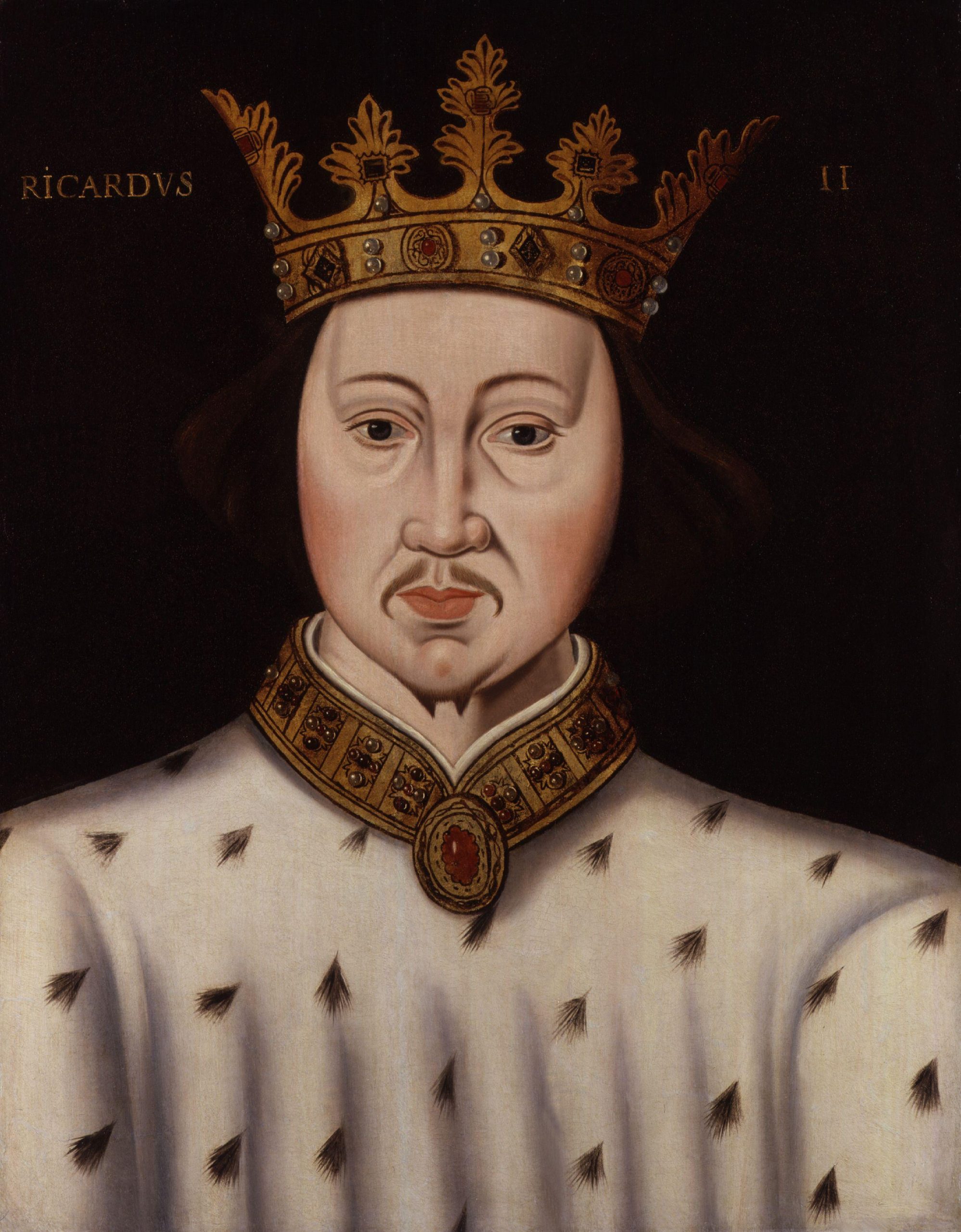
King Richard II was crowned in 1377 at just ten years old. From childhood, people around him reinforced the idea that his authority came directly from God. He was not simply a boy wearing a crown. He was the anointed king, chosen by divine will and entitled to obedience.
As Richard grew older, that belief in his own authority only became stronger. He surrounded himself with lavish ceremony, demanded increasingly elaborate displays of submission, and became deeply invested in the idea that his position was sacred and untouchable. But Richard was not nearly as secure as his royal image suggested. Beneath the grandeur, a ruler grew increasingly terrified of losing control.
By the 1390s, Richard’s relationship with his nobles had deteriorated badly. He had begun ruling in ways that made even his own subjects question whether the king understood the limits of his authority. The more threatened he felt, the more fiercely he clung to the belief that something greater than politics protected his crown.
Eventually, that belief became almost obsessive.
The Holy Oil
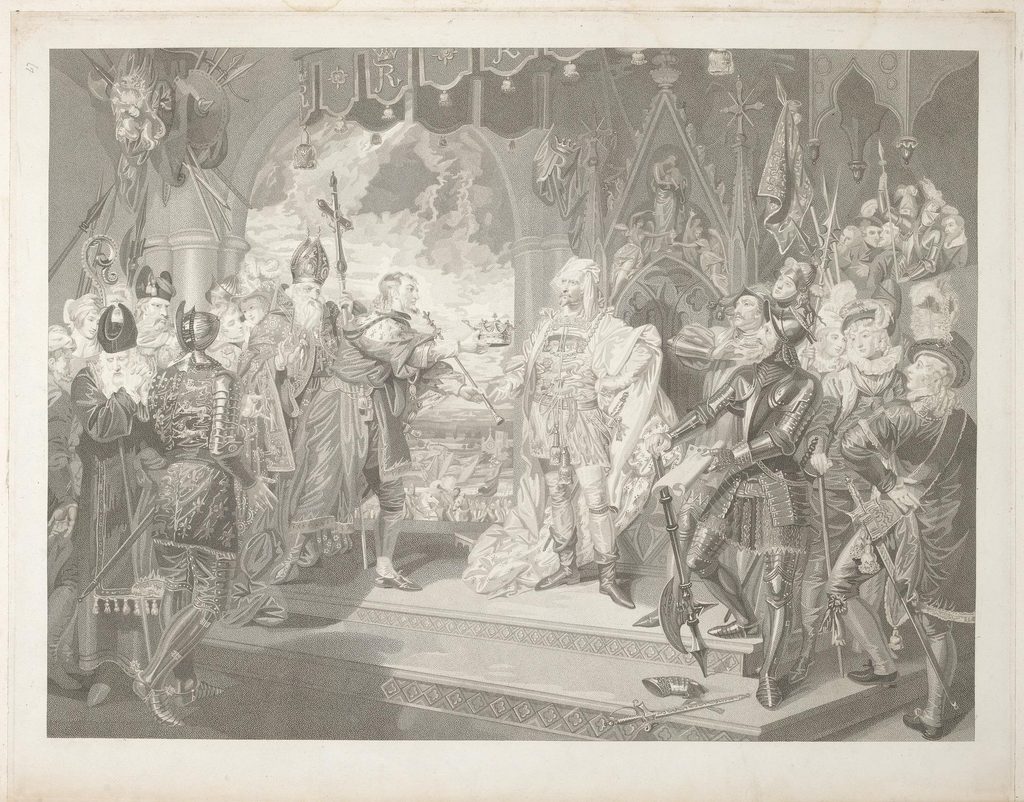
Richard’s desperation was perhaps most clearly revealed in his obsession with a small golden vessel said to contain miraculous holy oil.
According to medieval legend, the Virgin Mary had personally given the oil to the murdered martyr St. Thomas Becket, promising that any English monarch anointed with it would become a divinely protected champion of the Church. The story gave the oil an almost supernatural importance. To Richard, it was more than a religious relic. It symbolized divine protection for the English crown.
As Richard’s political authority began to collapse, his interest in the oil grew increasingly desperate.
He eventually appealed to the Pope for permission to hold another coronation ceremony so that he could be anointed once again with Becket’s sacred oil. Richard apparently believed that the ceremony could strengthen his position and provide divine protection against the nobles challenging his authority.
The request was refused.
Richard’s problem was no longer simply that his nobles were becoming rebellious. His entire understanding of kingship was beginning to work against him. He believed that because his authority came from God, opposition to him was not merely political disagreement. It was an attack on the divinely established order itself.
Then, in 1399, the very thing Richard had feared happened.
His cousin Henry Bolingbroke returned to England and seized power. Richard was deposed, and Bolingbroke became King Henry IV.
But the story of the holy oil did not end with Richard’s removal.
The sacred vessel Richard had placed so much faith in fell into Henry’s hands. Henry was eventually anointed with the same oil at his coronation, turning one of Richard’s most cherished symbols of divine protection into powerful propaganda for his successor.
The irony was almost impossible to miss. Richard had believed the oil could help prove that God protected his crown. Now the same relic was being used to legitimize the man who had taken it from him.
The Double Exile
Richard’s obsession with authority eventually caught up with him through the very nobles he had once tried to control.
The trouble began in 1398 when Henry Bolingbroke publicly accused Thomas Mowbray, Duke of Norfolk, of treason. Bolingbroke claimed that Mowbray had spoken treasonous words against Richard and had been involved in the murder of their uncle, Thomas of Woodstock, Duke of Gloucester.
Gloucester had died in suspicious circumstances the previous year after being arrested on Richard’s orders. Many of his contemporaries suspected that the king had arranged his death, although the exact circumstances remain uncertain. What was certain was that Richard had made powerful enemies, and Bolingbroke was now openly challenging one of them.
Mowbray vehemently denied the accusations.
With neither man willing to back down, the dispute was eventually settled in the traditional medieval fashion. They would fight.
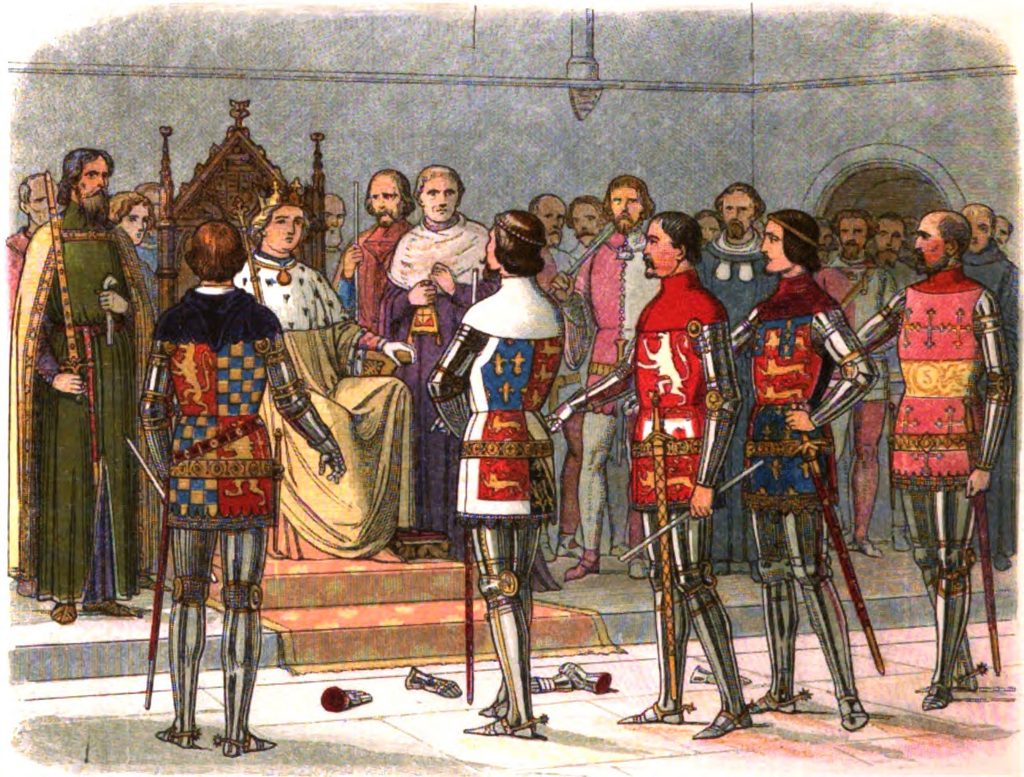
On September 16, 1398, Bolingbroke and Mowbray arrived at Coventry dressed in full armor, surrounded by an enormous crowd waiting to watch two of England’s most powerful nobles settle their dispute by combat.
Then, at the very last moment, Richard stopped it.
As the two men prepared to charge, the king threw down his royal staff and ordered the duel to end. Rather than let either man prove his accusation through combat, Richard chose to punish them both. Mowbray was banished from England for life. Bolingbroke was sentenced to ten years in exile, although Richard later reduced the punishment to six.
For the moment, Richard had removed two of his most troublesome political rivals.
But he had also created the man who would eventually take his crown.
The Inheritance That Changed Everything
Richard’s opportunity to permanently eliminate Bolingbroke came less than a year later.
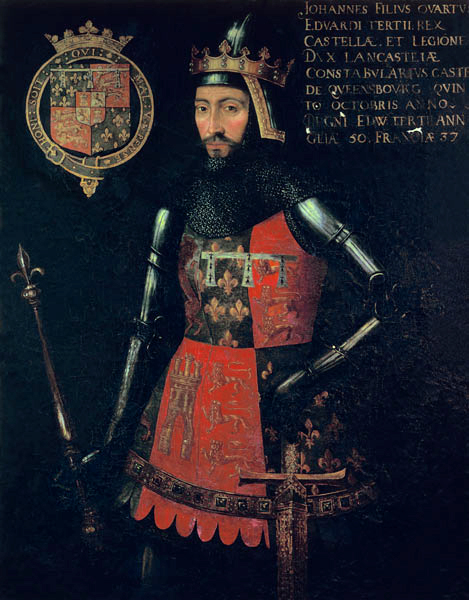
In February 1399, Bolingbroke’s father, John of Gaunt, died.
Under ordinary circumstances, his son should have inherited the enormous Lancastrian estate. Instead, Richard broke his earlier promise to Bolingbroke and extended his exile indefinitely. The crown confiscated the inheritance and absorbed the vast Lancastrian estates.
It was an extraordinary decision.
Bolingbroke was not some distant political enemy. He was Richard’s cousin and one of England’s wealthiest men. By taking his inheritance, Richard had effectively demonstrated that even a nobleman’s legally established property could be taken if the king decided to do so.
Worse still, Richard used the wealth to finance his military campaign in Ireland.
That decision transformed a political rivalry into something much more dangerous.
Bolingbroke now had little left to lose.
And Richard had given the rest of England a reason to wonder whether they might be next.
The King Who Tried to Rule Without Them
Richard had been moving toward this confrontation for years.
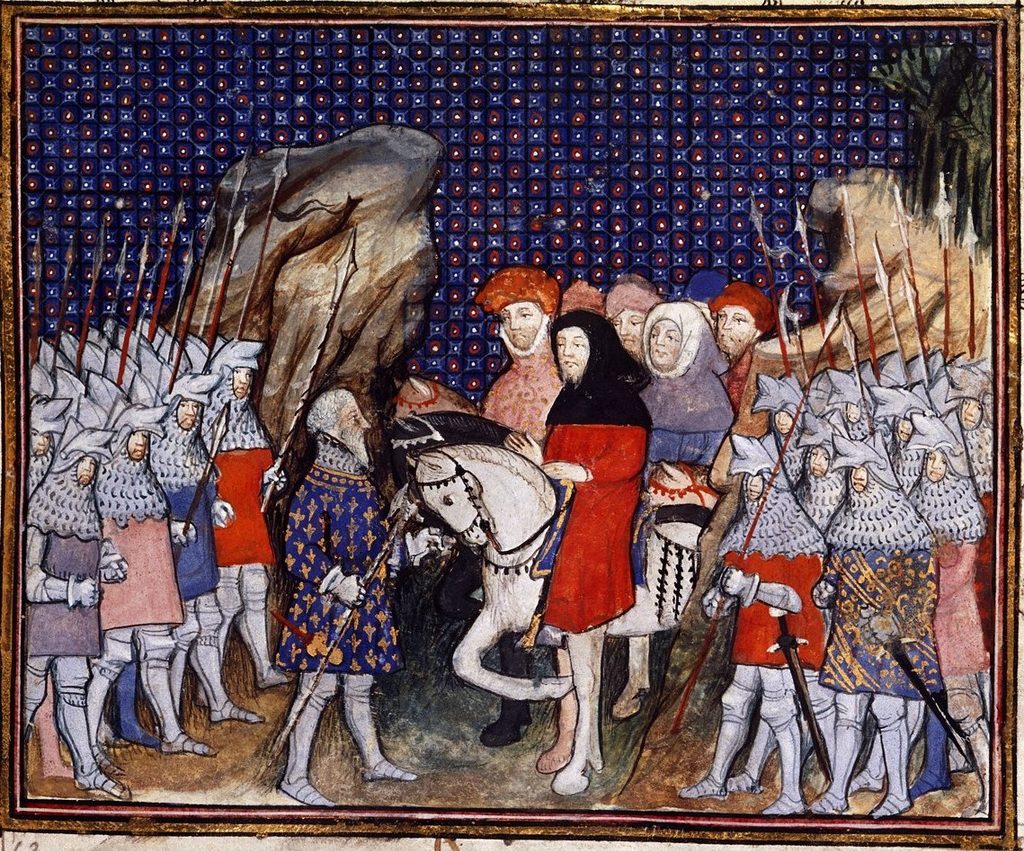
In 1386, a group of powerful nobles known as the Lords Appellant had successfully challenged his authority and forced him to dismiss several of his closest advisers. Richard never forgot the humiliation.
A decade later, he finally struck back.
Beginning in 1397, Richard arrested, executed, or exiled several of the men who had once restricted his power. Among them were some of the kingdom’s most influential figures. Their defeat allowed Richard to rebuild his authority around a much smaller circle of loyal supporters.
Parliament also came under increasing royal pressure.
At the Parliament of Shrewsbury in 1398, Richard secured extraordinary powers and financial concessions. His control over government became increasingly personal, while his relationship with the traditional political establishment deteriorated.
Richard also relied heavily on men from Cheshire, where he had built a particularly loyal military following. These troops became an important source of protection for a king who increasingly distrusted the traditional nobility.
Richard was no longer simply trying to govern England.
He was trying to make England obey him.
That distinction would prove disastrous.
When Bolingbroke and Mowbray turned against one another in 1398, Richard had an opportunity to remove the last two major nobles associated with the Lords Appellant. He took it.
Richard apparently failed to understand how much resentment his methods had created.
In May 1399, confident enough in his position to leave England, Richard sailed for Ireland to deal with a rebellion. He left the government in the hands of his uncle, Edmund, Duke of York.
It was a catastrophic mistake.
With Richard safely across the Irish Sea, England was left vulnerable.
And Bolingbroke came home.
The Return of Henry Bolingbroke
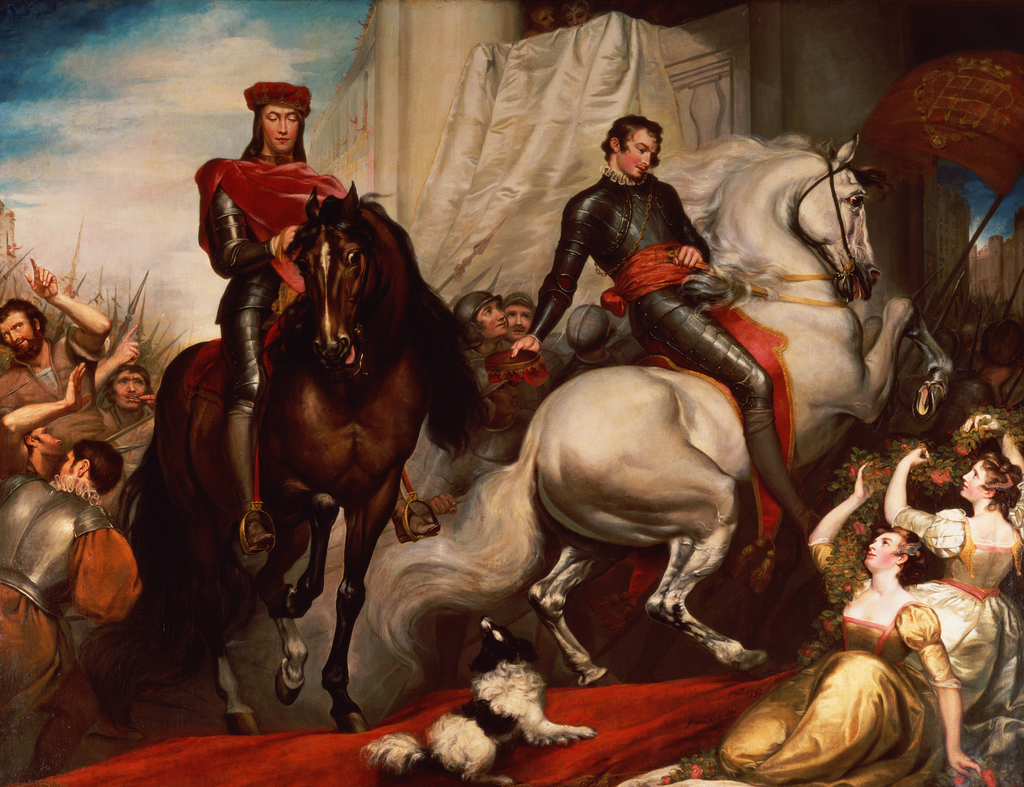
Bolingbroke landed in England in the summer of 1399, officially presenting his return as an attempt to reclaim the inheritance Richard had taken.
That claim gave his invasion a crucial appearance of legality.
But as Bolingbroke moved through England, powerful nobles began joining him. Richard’s government struggled to organize an effective resistance, and support for the king collapsed with astonishing speed.
The king who had spent years intimidating Parliament and crushing his political enemies suddenly found himself without an army willing to fight for him.
Richard returned from Ireland to a kingdom that was rapidly slipping away.
He eventually retreated to Conwy Castle in Wales, hoping the fortress would give him enough time to regroup. Instead, Bolingbroke sent Henry Percy, Earl of Northumberland, to negotiate.
According to later accounts, Percy promised that if Richard surrendered and allowed Parliament to meet, he would be permitted to remain king.
For Richard, there was another reason to believe the offer.
Northumberland reportedly swore an oath upon the Eucharist that Henry meant no harm to the king.
Richard trusted him.
He left the safety of the castle.
It was a trap.
As Richard and his companions traveled through the Welsh countryside, they were intercepted and taken prisoner. The king was brought to London and eventually confined in the Tower.
Richard II’s reign was effectively over.
The 33 Articles of Deposition
There was still one problem.
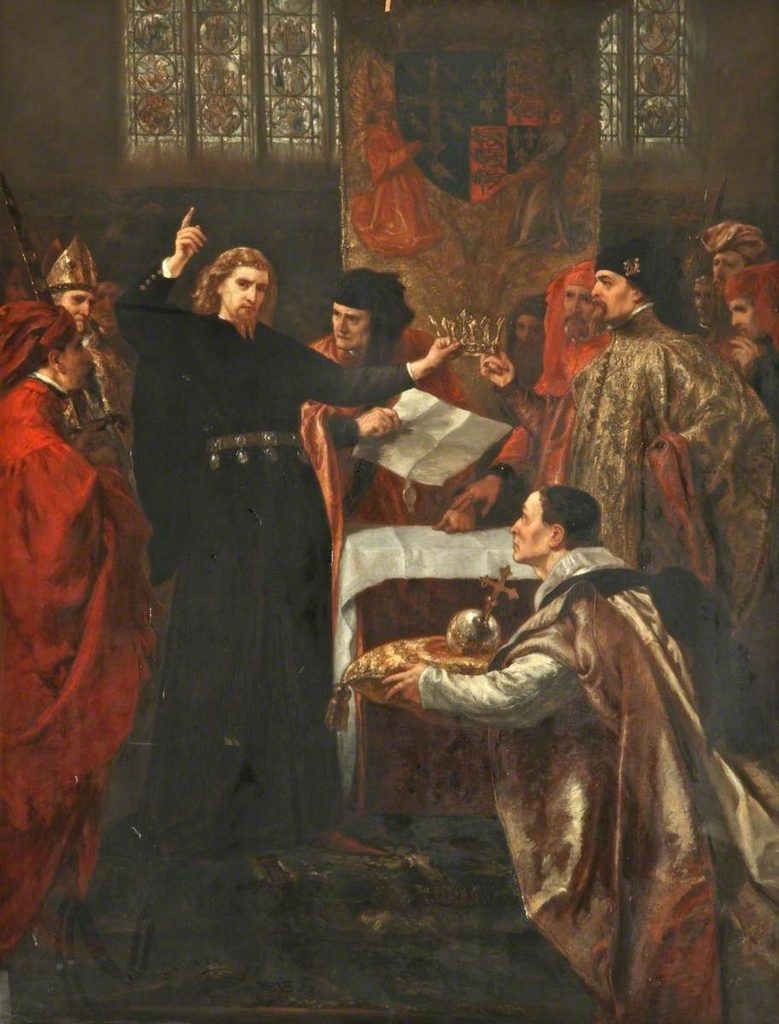
Henry Bolingbroke could not simply take the throne by force and expect the kingdom to accept him without question. Medieval kingship was deeply connected to the idea that a monarch ruled by divine authority. If Henry openly presented himself as nothing more than a conqueror who had stolen the crown, he risked undermining his own legitimacy.
So Parliament built a legal case against Richard.
On September 30, 1399, Parliament presented a series of accusations against the deposed king. The charges portrayed Richard as a ruler who had abused his authority, violated the kingdom’s laws, misused royal finances, unlawfully confiscated property, and undermined Parliament.
Among the most serious accusations was seizing Bolingbroke’s inheritance.
Richard was also accused of demanding excessive taxes, forcing wealthy subjects to sign blank charters that could later be used against them, and claiming that the authority to make and interpret laws belonged ultimately to the king himself.
The charges served as much a political purpose as a legal one.
Richard could not simply be removed because his cousin wanted his crown. He had to be presented as a king who had forfeited his right to rule.
On September 29, Richard formally abdicated.
The following day, Parliament accepted his resignation and declared the throne vacant.
Then Henry Bolingbroke stepped forward.
He was crowned King Henry IV.
The man Richard had exiled, disinherited, and attempted to eliminate had become king of England.
The Silent End at Pontefract
Richard’s downfall was complete, but his story was not over.
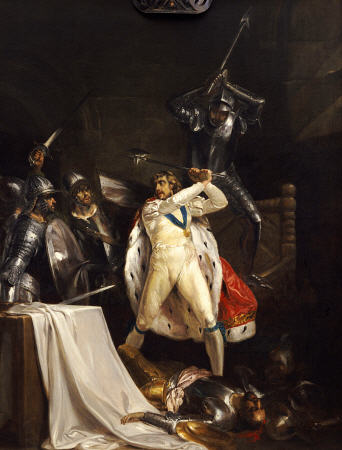
After his deposition, he was initially held in the Tower of London before being transferred to Pontefract Castle in Yorkshire.
There, in February 1400, Richard II died.
He was only thirty-three years old.
The exact circumstances of his death remain uncertain.
Later Lancastrian accounts claimed that Richard had simply lost the will to live after a failed rebellion by his supporters and refused food. Another long-standing theory holds that he was deliberately starved on Henry IV’s orders.
The evidence does not allow us to say with certainty which explanation is correct.
What is known is that Richard died in captivity, far removed from the magnificent court where he had once demanded absolute obedience.
His remains were eventually buried at Westminster Abbey, where his tomb still reminds us of the extraordinary rise and fall of his reign.
Richard began his life as a sacred child king, surrounded by people who told him his authority came directly from God. He spent his adulthood trying to make that authority absolute.
But the more fiercely he tried to control his kingdom, the more enemies he created.
He demanded loyalty and received fear.
He demanded obedience and created resentment.
And when the moment came to defend his kingdom, no one was left willing to do it.
The king who once expected his subjects to kneel before him ultimately lost everything because he could not recognize the difference between being obeyed and being respected.
Leave a Reply