
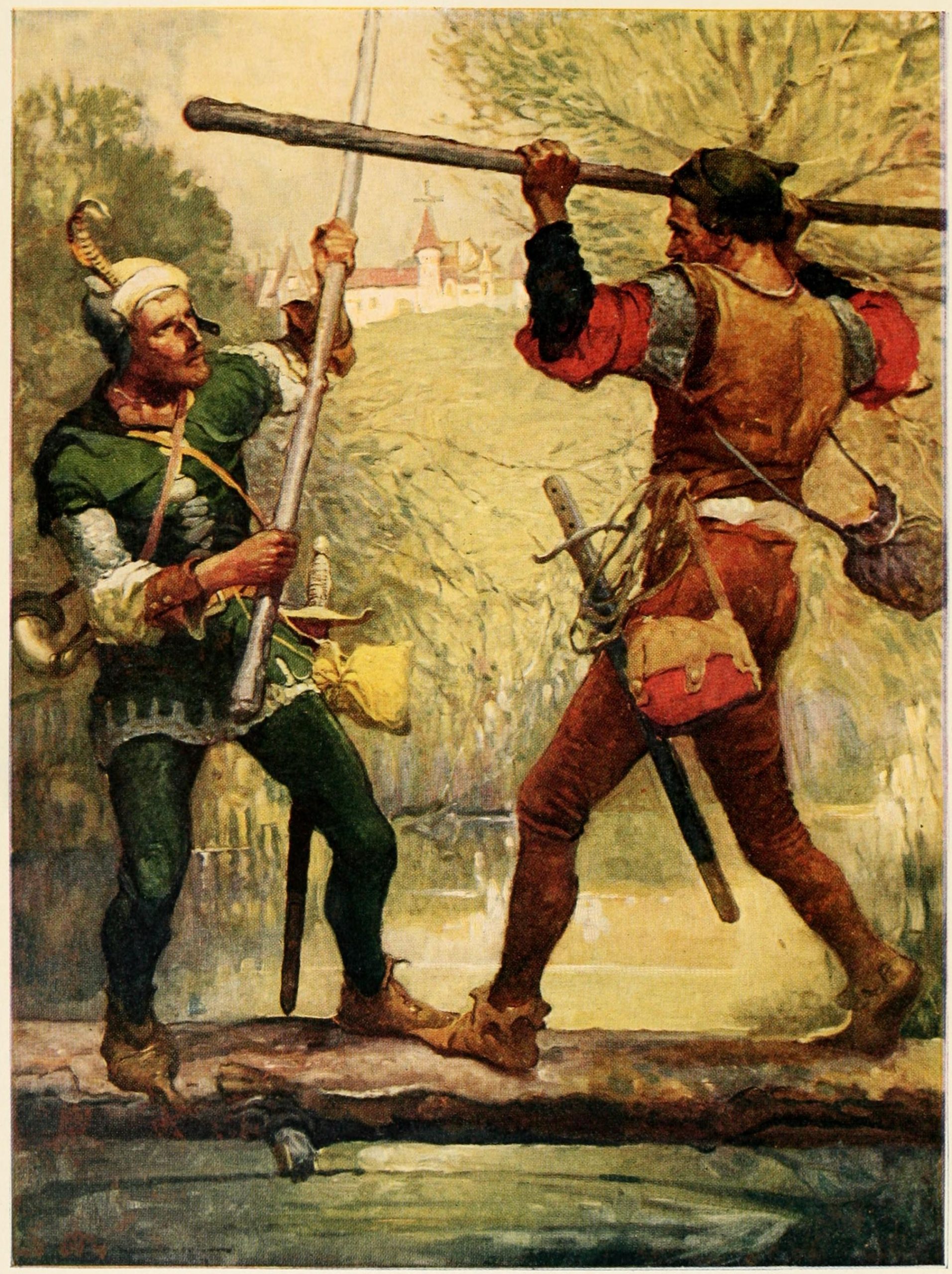
I shall take it with me; for it will be better used for charity and the good of my merry band than in the enriching of such knaves as these.
That quote from Howard Pyle’s 1883 classic, The Merry Adventures of Robin Hood, perfectly embodies the “take from the rich and give to the poor” legend we all grew up with.
To most of us, Robin Hood is that charismatic, sharp-witted hero and noble philanthropist who uses his wit to outmaneuver corruption in a vivid, whimsical Sherwood Forest. It’s a story taught to children for generations, inspiring generosity and justice.
But the real story is far more disturbing.
The original Robin Hood wasn’t noble. In fact, he wasn’t even a single person. The legend was built on an alias used by multiple real-life fugitives, the kind of hardened medieval criminals who would despise the modern hero. Early historical accounts detail outlaws who committed unthinkable acts, including graphic disfigurement, anti-clerical violence, and severe crimes against royal property.
How did a dark, violent tale of medieval crime turn into a sanitized, multi-billion-dollar story about a charming, philanthropic hero? To understand the shift, we have to rewind through seven hundred years of rebrands.
Act I: The Violent Outlaw (12th–14th Century)
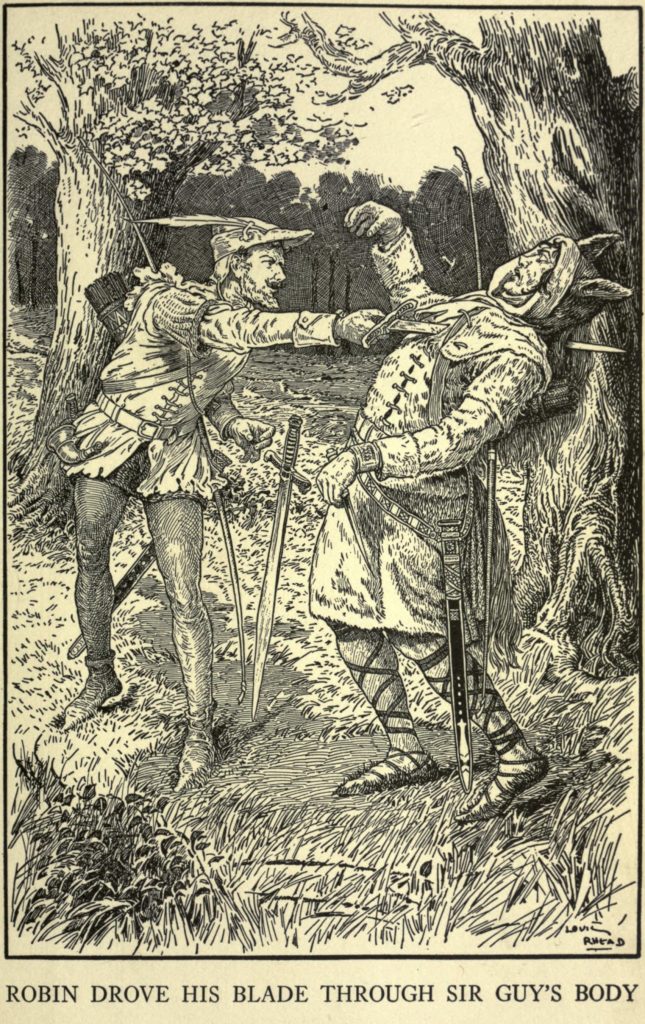
Under the rule of English monarchs like King Henry III and Edward I, strict Forest Laws designated massive areas of the countryside as royal land reserved exclusively for the King. For commoners, these restrictions created immense economic pressure. Violating forest law or clashing with royal foresters carried severe penalties: imprisonment, mutilation, or execution.
These harsh conditions created a breeding ground for outlaw legends.
Between 1225 and the 1360s, names like Robert Hod, Robehod, and Robertus Hode appear frequently in court records. Rather than referencing a single historical figure, these names became common aliases adopted by fugitives on the run. They used these shared identities to evade or intimidate local authorities.
As these outlaw tales circulated, they morphed into popular ballads. One of the earliest surviving narratives, A Gest of Robyn Hode, depicts brutal class warfare, highway robbery, and an ending where Robin is betrayed and killed by a prioress.
An even earlier surviving ballad, Robin Hood and the Monk, is darker still. It details extreme anti-church violence, including a scene where Little John and Much the Miller’s son execute a monk and murder his young page boy to eliminate witnesses.
These early ballads show that the original Robin Hood was not operating according to a “steal from the rich and give to the poor” formula. While he maintained his own rough moral code, he was fundamentally a violent outlaw. Nothing was off-limits…not even children.
Furthermore, his original setting was different:
- Location: The earliest medieval tales placed him in Barnsdale (further north), not Nottingham’s Sherwood Forest.
- Companions: Iconic figures like Maid Marian and Friar Tuck were completely absent, only joining the lore centuries later during Tudor May Day festivities.
- Poaching: While modern audiences assume Robin was always famous for poaching the King’s deer, medieval historians note that hunting royal deer was not the primary focus of these early tales. That detail was solidified much later.
Act II: The Folk Anti-Hero (15th–16th Century)
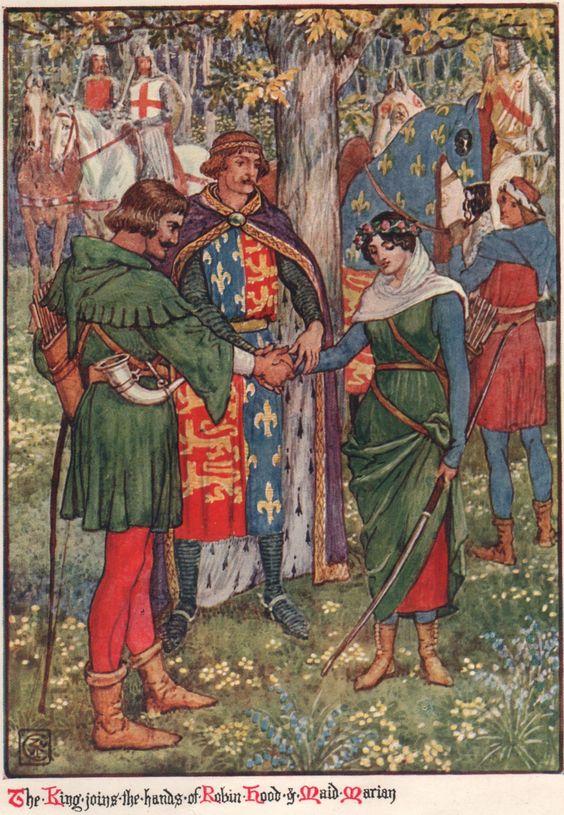
Despite the horrific crimes in the ballads, medieval commoners loved Robin Hood. Audiences viewed his actions as a fantasy of revenge against oppressive authorities.
Storytellers gradually humanized Robin for his listeners. He was shown experiencing guilt for his actions and maintaining a fanatic devotion to the Virgin Mary. Meanwhile, his opponents were wealthy bishops and corrupt clerics who were portrayed as predatory figures who extracted wealth from the poor instead of offering spiritual direction. To the audience, this transformed Robin into a complex anti-hero.
Deception and humor also made him difficult for audiences to hate. He frequently outsmarted officials by wearing disguises, passing counterfeit coins, and orchestrating sly traps.
However, a violent criminal who robbed and executed monks was not marketable to broader, wealthier audiences. To survive, the character needed a complete social upgrade.
Act III: Gentrification & Romanticization (1500s–1800s)
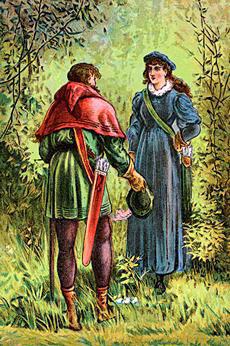
The Elizabethan Era brought severe economic anxiety, high unemployment, and rising homelessness. With real outlaws posing a genuine threat to public safety, polite society could no longer openly celebrate a violent common criminal.
With the rise of commercial theater, playwrights competed fiercely for audiences and needed to appeal to wealthy, noble patrons. Playwright Anthony Munday provided Robin Hood’s most pivotal makeover. In his 1598 play, The Downfall of Robert, Earl of Huntingdon, Robin was rewritten as a disgraced nobleman: the Earl of Huntingdon.
The play was adapted for court performances, bringing this newly aristocratic Robin Hood directly before Queen Elizabeth I. Turning a common criminal into a fallen noble was a massive success, effectively gentrifying the character.
It was also during this era that Robin acquired his iconic motto. In 1592, historian John Stow recorded one of the earliest descriptions of Robin as a noble champion who:
- Wanted no woman to be oppressed.
- Spared the poor and vulnerable.
- Stole only from the rich.
In just a few decades, storytellers transformed Robin from a self-serving medieval mugger into an altruistic folk hero.
Act IV: The Publishing Boom & The Modern Franchise (1800s–Present)
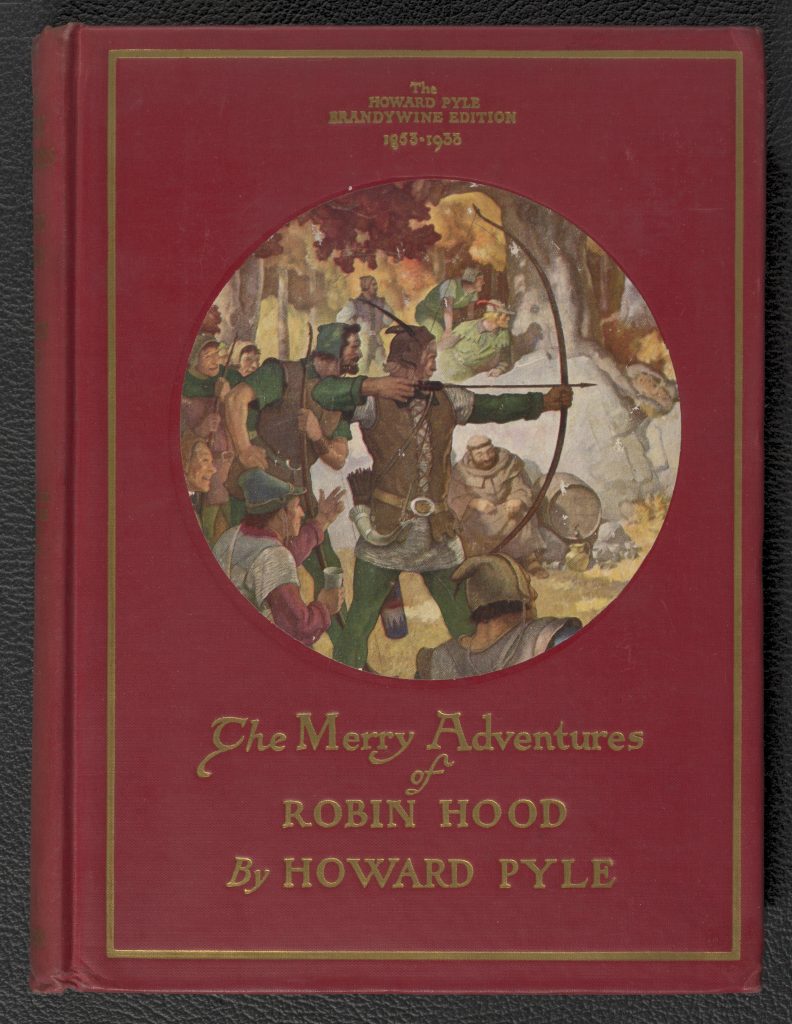
In 1883, the legend underwent its final, most lucrative transformation with Howard Pyle’s The Merry Adventures of Robin Hood. Pyle turned the narrative into a warm, comedic, family-friendly adventure.
Instead of a dangerous forest inhabited by ruthless criminals, Sherwood became a cozy, rustic community. Battles were staged as harmless, humorous scuffles rather than graphic violence. This was finally a version of Robin Hood that could be handed to a child without explanation.
The Commercial Strategy Behind the Rebrand
By the late 19th century, children’s publishing had evolved into a highly profitable industry. Publishers competed aggressively for young readers, especially during the holiday trade, and advancements in color printing turned illustrated books into high-margin consumer products.
Pyle didn’t invent a new character; he took an established brand, stripped away its medieval brutality, and repackaged it as an illustrated adventure.
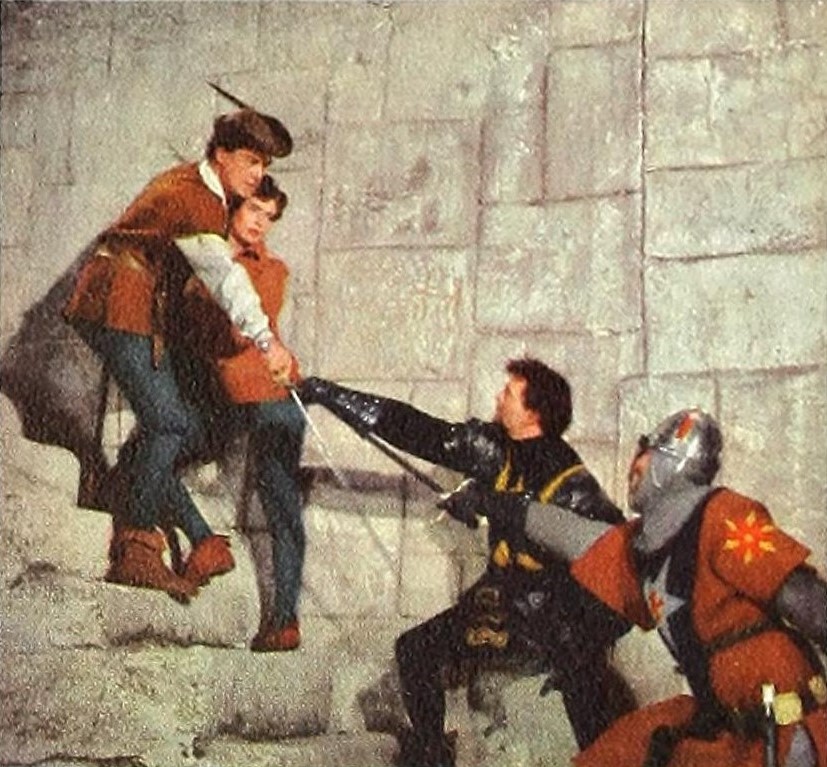
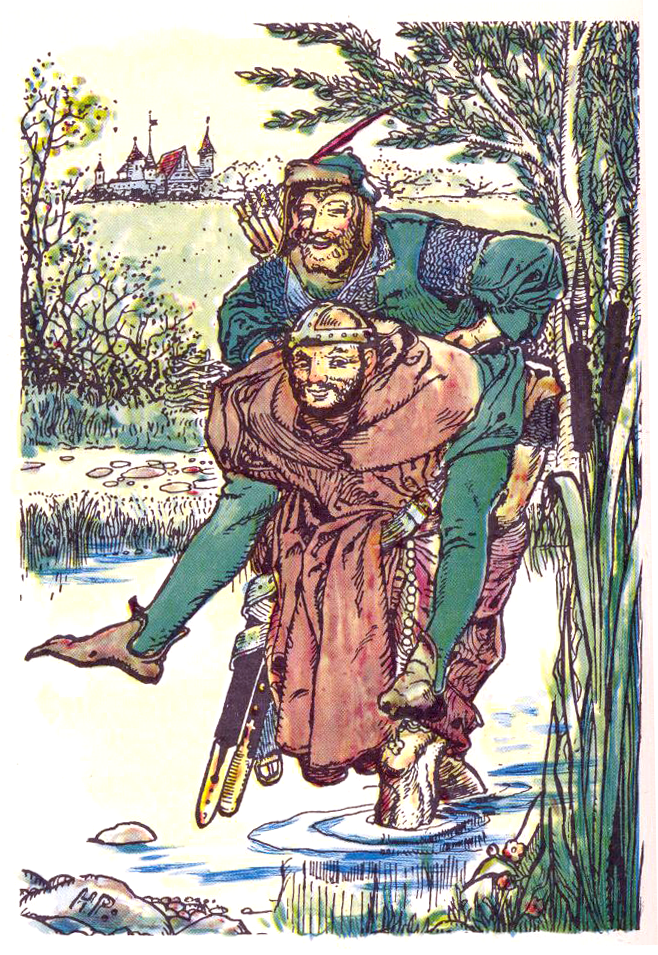
He also crafted the character’s visual identity. Drawing inspiration from Renaissance woodcuts, Pyle’s line art established the classic look of the Merry Men: Lincoln green tunics, fitted tights, and feathered caps. When Hollywood began producing Robin Hood films in the 1920s and 30s, studios copied Pyle’s visual design directly from the page.
From Pyle’s 1883 success to Disney’s 1973 animated classic, the sanitized, noble version of Robin Hood became the dominant global standard.
The Real Mystery of Sherwood Forest
The original Robin Hood was no children’s fantasy. He was an outlaw who was cunning, violent, and at times brutal.
The children’s publishing boom didn’t create Robin Hood’s popularity; it provided the commercial incentive to sanitize an already famous character, transforming him into a multi-billion-dollar global franchise spanning books, film, television, and merchandise.
The legend survived for over seven hundred years not because the character stayed the same, but because he didn’t. Every era reshaped Robin Hood into the exact hero its culture required.
Leave a Reply