Modern forensic science has transformed the way we investigate the past. DNA analysis can identify long-dead individuals, chemical testing can reveal what people ate or were exposed to, and technologies like LiDAR and ground-penetrating radar can uncover structures hidden beneath the earth.
We have answered questions that once seemed impossible to solve. We know far more about how the pyramids were constructed, what may have contributed to King Tutankhamun’s death, and how ancient trade networks connected distant civilizations.
And yet, some historical mysteries remain stubbornly out of reach.
In these cases, the evidence exists, but it is incomplete, inaccessible, or simply too strange to produce a definitive answer. Some have been debated for centuries. Others have generated competing scientific explanations but no universally accepted solution.
Here are five historical cold cases that modern science still cannot completely solve.
1. The Disappearance of the Princes in the Tower (1483)
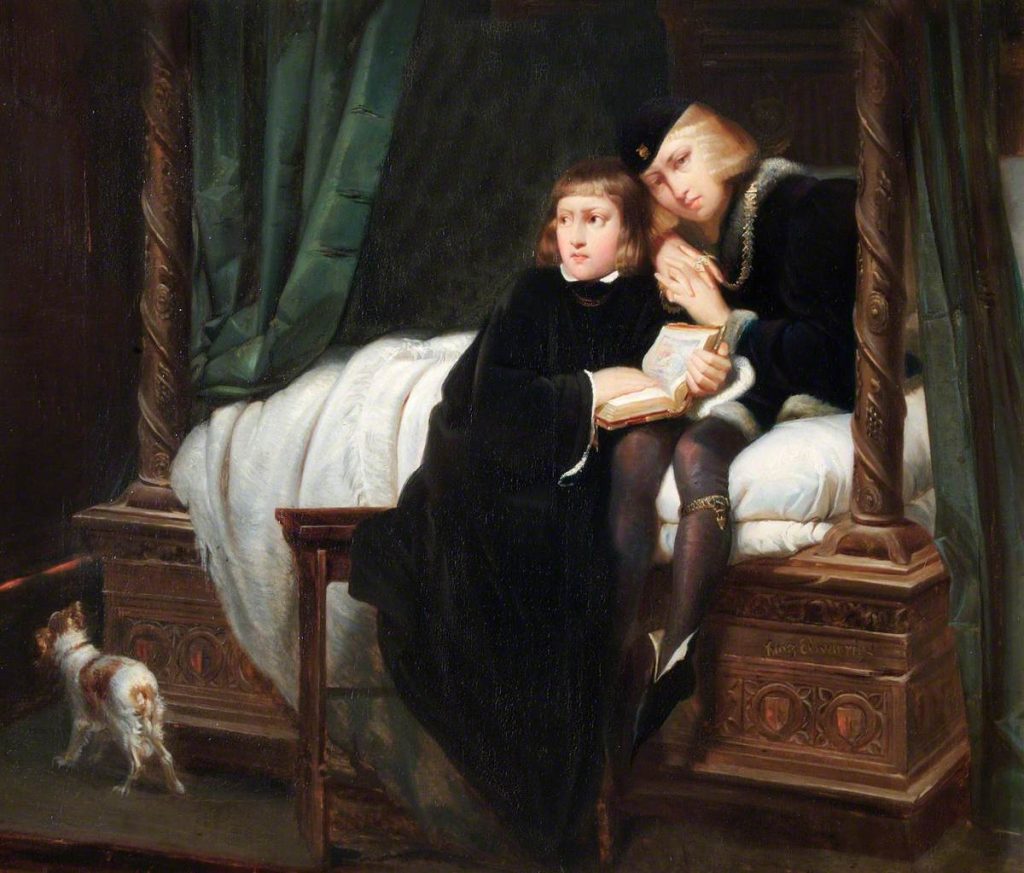
Following the death of King Edward IV, his two young sons, 12-year-old Edward V and 9-year-old Richard, Duke of York, were taken to the Tower of London.
At first, this was not particularly unusual. The Tower was a royal residence and a fortress, and Edward was expected to be crowned king there.
Instead, the situation changed dramatically.
Later that year, Edward’s uncle, Richard, Duke of Gloucester, was declared king, becoming Richard III. Meanwhile, the two boys gradually disappeared from public view.
By the end of the summer, they had vanished completely.
What happened to them remains one of the most enduring mysteries in English history.
The most famous theory is that Richard III ordered their deaths to eliminate potential rivals to his throne. But that has never been conclusively proven. Other theories have suggested that the boys were secretly removed from the Tower, killed by another political faction, or died from natural causes.
Then, in 1674, workers carrying out renovations at the Tower reportedly discovered a wooden chest containing the skeletons of two children beneath a staircase.
The remains were eventually placed in Westminster Abbey and identified as those of the missing princes.
But modern forensic testing has never conclusively established their identity.
The bones have not undergone modern DNA analysis or a comprehensive osteological examination that could settle their identity. Without that evidence, one of the most important questions remains unanswered:
Are these actually the remains of Edward V and Richard of York?
Until the remains can be conclusively identified, the fate of the Princes in the Tower remains locked somewhere between historical evidence and royal legend.
And unlike the next mystery, this one does not involve an unidentified artifact or an ancient tomb.
It involves two children who disappeared.
2. The Green Children of Woolpit (12th Century)
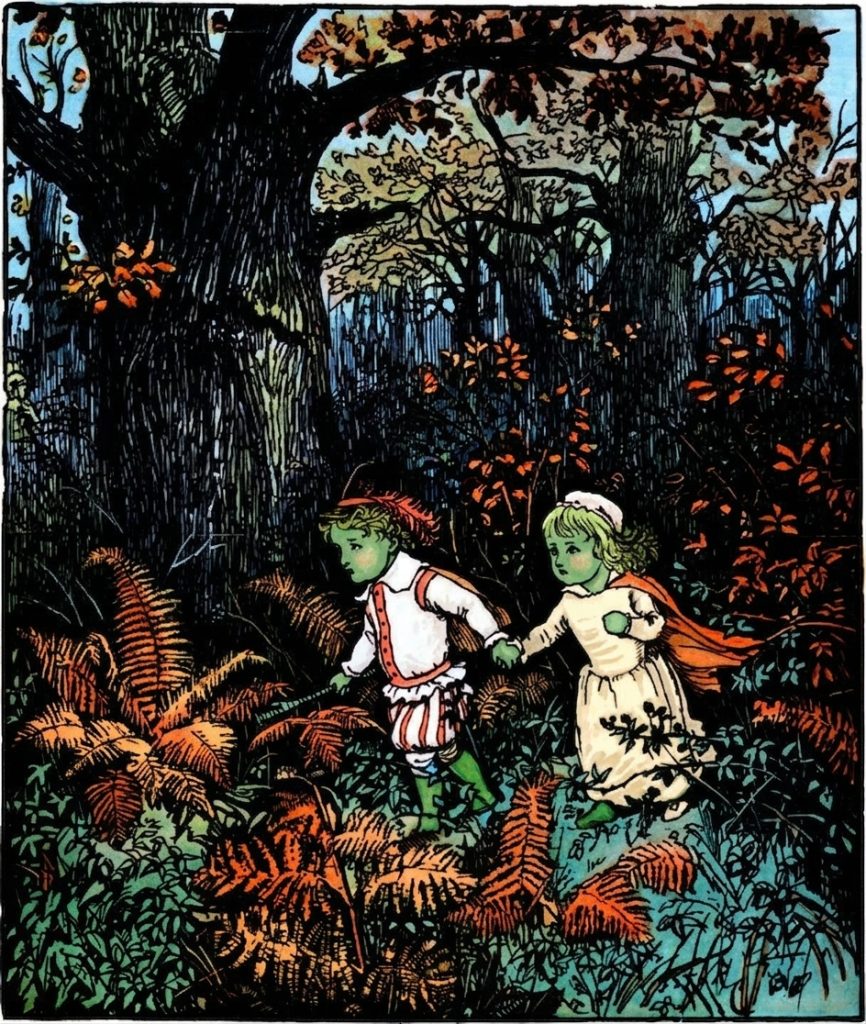
In medieval England, two children supposedly appeared in the village of Woolpit in Suffolk under circumstances that sound almost impossible.
Two medieval writers, Ralph of Coggeshall and William of Newburgh, recorded the story.
According to their accounts, a brother and sister were discovered near a pit used to trap wolves. They wore unfamiliar clothing, spoke a language no one understood, and had an extraordinary physical characteristic.
Their skin was green.
At first, the children refused to eat anything except beans. Eventually, they were introduced to other foods and gradually began eating normally. As the girl recovered, her unusual coloring reportedly disappeared.
Her brother, however, died not long after their arrival.
The surviving girl eventually learned English and attempted to explain where they had come from.
She claimed that she and her brother had lived in a place called St. Martin’s Land, an underground world where everything existed in perpetual twilight. According to her account, they had entered a cave and somehow emerged into the world above.
It sounds like a fairy tale.
But historians and medical researchers have proposed several explanations that are considerably less supernatural.
One possibility is that the children suffered from severe malnutrition or anemia, conditions that can produce unusual skin coloration. Another theory suggests that they may have been the children of Flemish immigrants who became separated from their community.
Other explanations have included accidental exposure to toxic substances.
The problem is that no biological evidence remains to examine.
No remains remain to test, no DNA to analyze, and no physical objects that can conclusively connect the children to any particular community.
Medieval accounts are also separated from the event by enough time and storytelling tradition to make their accuracy hard to determine.
So what were the Green Children?
Victims of malnutrition? Foreign children separated from their families? The source of a story that became increasingly fantastical with retelling?
Or something we simply no longer have enough evidence to understand?
More than 800 years later, we still cannot say for certain.
3. The Unopened Tomb of China’s First Emperor (210 BCE)
Some mysteries are difficult to solve because the evidence disappeared.
Others are difficult because the evidence is still sitting underground.
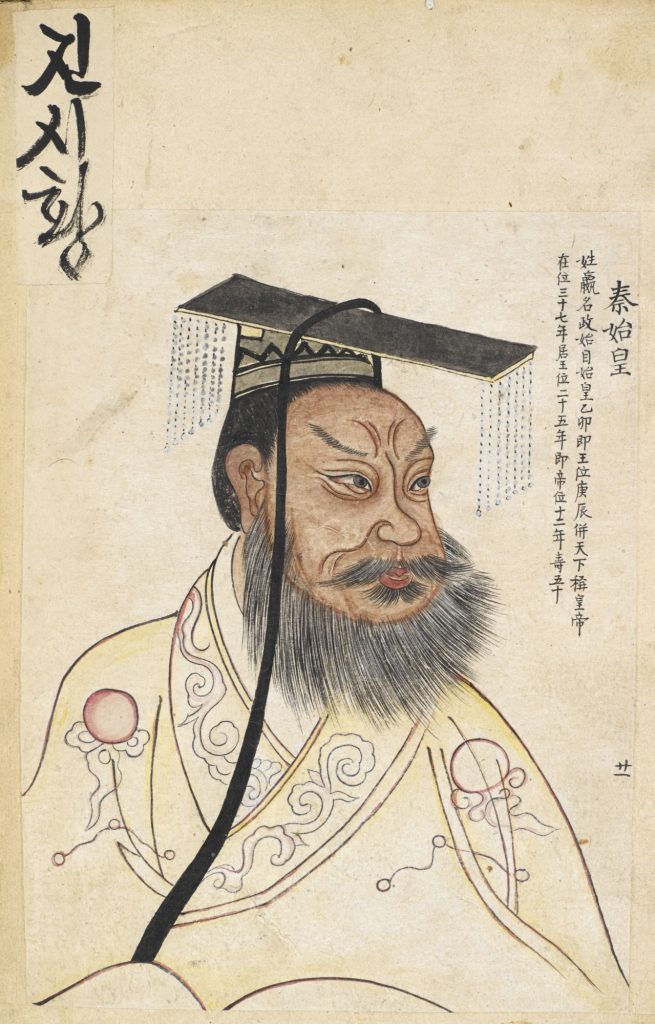
In 1974, farmers in Xi’an, China, accidentally uncovered fragments of what would become one of the most extraordinary archaeological discoveries ever made: the Terracotta Army.
Thousands of life-sized soldiers, horses, chariots, and weapons had been buried to protect Qin Shi Huang, the first emperor to unify China, in the afterlife.
But despite decades of archaeological work surrounding the site, one part of the complex remains untouched.
The emperor’s central tomb has never been opened.
The decision is deliberate. Excavating an ancient burial chamber can expose fragile organic materials to oxygen, humidity, microorganisms, and sudden environmental changes. Once opened, some materials may begin deteriorating almost immediately.
There is also another concern.
The ancient historian Sima Qian described Qin Shi Huang’s tomb as an enormous underground recreation of his empire, complete with palaces, waterways, and rivers of flowing mercury.
Modern research has provided an intriguing piece of evidence.
Soil around the burial mound contains unusually high concentrations of mercury, supporting at least part of Sima Qian’s account.
But that does not tell us exactly what is inside.
Modern imaging technologies can provide information about structures beneath the ground, but they cannot simply give archaeologists a clear view through a sealed ancient tomb without introducing additional risks.
That leaves archaeologists in an unusual position.
The tomb is potentially one of the greatest archaeological discoveries still waiting to happen, but opening it could destroy some of the very evidence scientists want to study.
For now, Qin Shi Huang’s final resting place remains sealed beneath the earth.
And whatever is inside has been waiting there for more than two thousand years.
4. The Mystery of the Roman Dodecahedra
Some historical mysteries are not hidden underground.
They are sitting in museums.
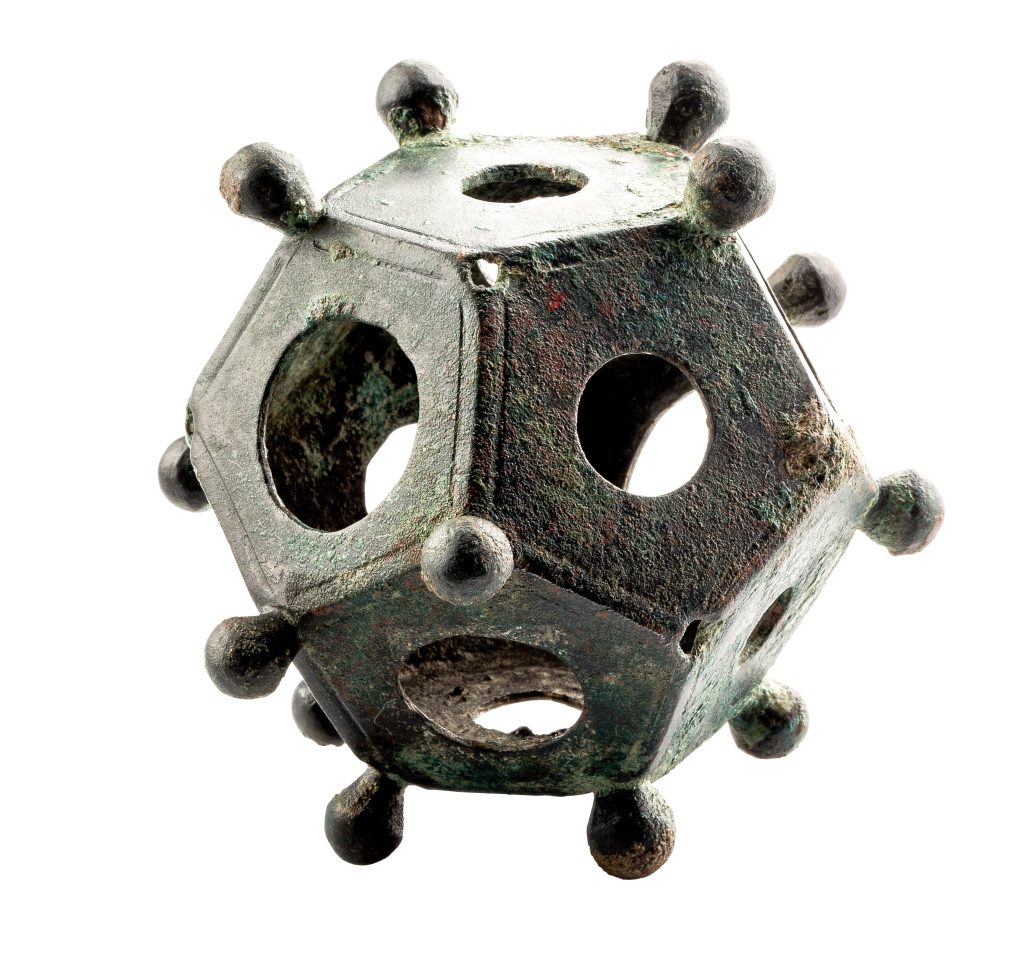
More than a hundred strange bronze objects known as Roman dodecahedra have been discovered across parts of the former Roman Empire, particularly in Britain, France, Germany, Belgium, and the Netherlands.
Each object is roughly the same general shape: twelve pentagonal faces, holes of different sizes, and small knobs at the corners.
And that is about where the certainty ends.
Nobody knows exactly what they were for.
What makes the mystery especially unusual is the lack of surviving written evidence. There is no known Roman manual explaining their purpose, no clear illustration showing one in use, and no universally accepted archaeological context that settles the question.
Researchers have proposed an astonishing range of possibilities.
They may have been surveying instruments, astronomical devices, measuring tools, candle holders, knitting aids, or objects connected to religious practices.
Some theories are more plausible than others, but none has managed to explain every known dodecahedron.
Their inconsistent dimensions make the mystery even more complicated. If they served a standardized technical purpose, you might expect their measurements to follow a recognizable system.
Instead, they vary.
And because most were found without enough contextual evidence to explain how they were used, modern testing can tell us what they were made from and how they were manufactured, but not necessarily what their creators intended.
It is a rare archaeological problem.
We know the Romans made them.
We know roughly when they were made.
We know where many of them were found.
We don’t know why.
And sometimes, knowing everything about an object except its purpose is what makes it so frustrating.
5. The Fatal Mystery of Dyatlov Pass (1959)
Unlike the other mysteries on this list, the Dyatlov Pass incident happened within living memory.
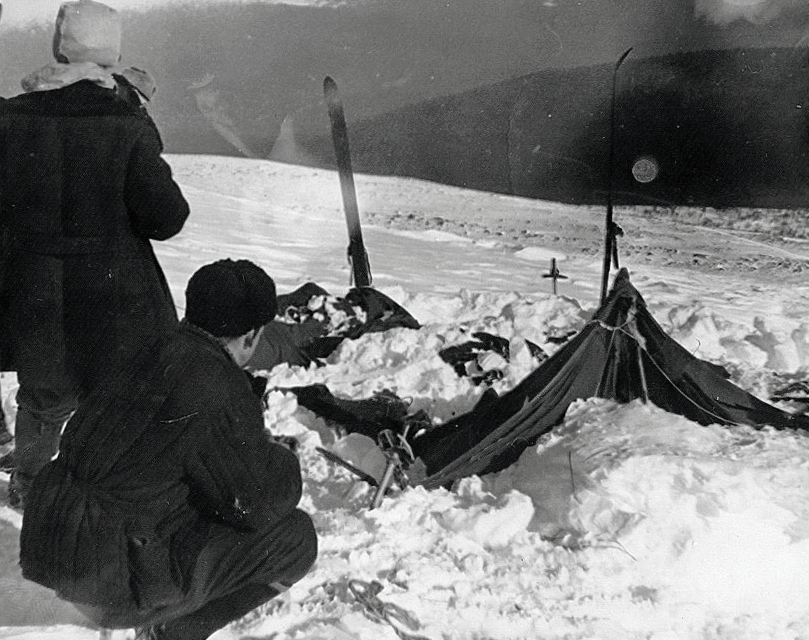
In February 1959, nine experienced hikers led by Igor Dyatlov disappeared while traveling through the northern Ural Mountains of the Soviet Union.
When searchers eventually located their campsite, the scene was deeply strange.
The tent had been cut open from the inside.
The hikers had fled into the freezing wilderness without adequate clothing or footwear, and their bodies were eventually discovered at different locations down the slope.
Several victims had suffered severe internal injuries.
Some injuries were so extensive that investigators later compared them to the forces of a major impact, yet there were relatively few corresponding external wounds.
Other details only added to the mystery.
Some of the bodies were missing soft tissue from the face, including the eyes and tongue, although decomposition and environmental exposure can produce such changes after death. Radiation was also detected on some clothing, although the significance of that finding has been debated.
For decades, theories ranged from avalanches and extreme weather to military activity and more extraordinary explanations.
Then, in 2021, researchers published a study proposing a more conventional explanation: a rare type of slab avalanche may have struck the campsite after the hikers went to sleep.
Computer modeling suggested that a delayed avalanche could produce injuries consistent with some of the trauma documented in the case while also explaining why the hikers abandoned their tent.
The theory provides a possible explanation for much of the evidence.
But it does not eliminate every question surrounding the case, and alternative interpretations continue to be debated.
That is what makes Dyatlov Pass such a persistent cold case.
Modern science has produced explanations.
It has produced several.
The problem is determining which explanation accounts for all of the evidence without requiring assumptions that cannot be tested.
Which Cold Case Should We Reopen?
Historical mysteries rarely survive because there is absolutely no evidence.
They survive because the evidence is incomplete.
Sometimes the problem is a sealed tomb. Sometimes it is the absence of human remains. Sometimes it is an artifact whose purpose was never written down.
And sometimes, we have an entire collection of evidence but still cannot make all the pieces fit.
Modern technology can reveal things historians could never have imagined investigating centuries ago. But science has limits, especially when the evidence has been lost, damaged, deliberately sealed away, or never recorded in the first place.
That leaves us with an intriguing possibility:
Some historical cold cases may eventually be solved by technology that does not exist yet.
Until then, the evidence is still waiting.
Leave a Reply