When October arrives, Halloween in the United States is usually presented as a celebration of everything frightening about death.
Graveyards become decorations. Skeletons hang from porches. Ghost stories fill television screens, and the dead become costumes, props, and monsters.
But within Haitian Vodou, the Gede tradition approaches death from a very different direction.
The dead are remembered, honored, fed, teased, and even joked with.
Known as Fet Gede, or the Festival of the Dead, the observances surrounding the Gede spirits take place mainly in early November and are closely tied to Haiti’s celebrations of All Saints’ Day and All Souls’ Day.
Rather than treating death as something to hide from, Gede traditions acknowledge it as part of life and maintain a relationship between the living and the dead.
Who Are the Gede?
The Gede are a family of spirits associated with death, cemeteries, sexuality, fertility, and the transition between life and death.
They are often portrayed as irreverent and humorous, and their behavior can be deliberately provocative. This humor is part of what makes the Gede so distinctive.
Death is serious.
The Gede do not always behave as though they have to be solemn.
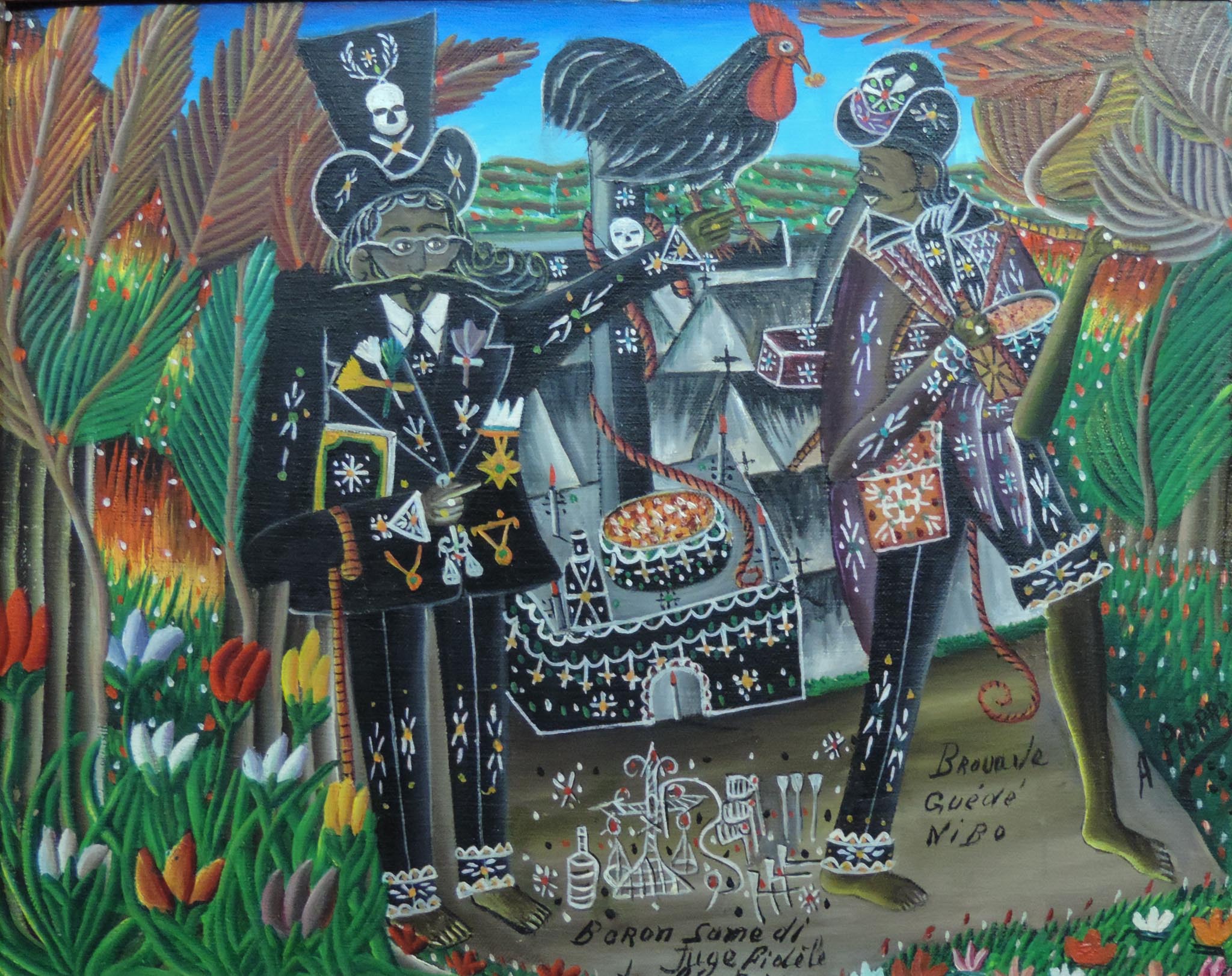
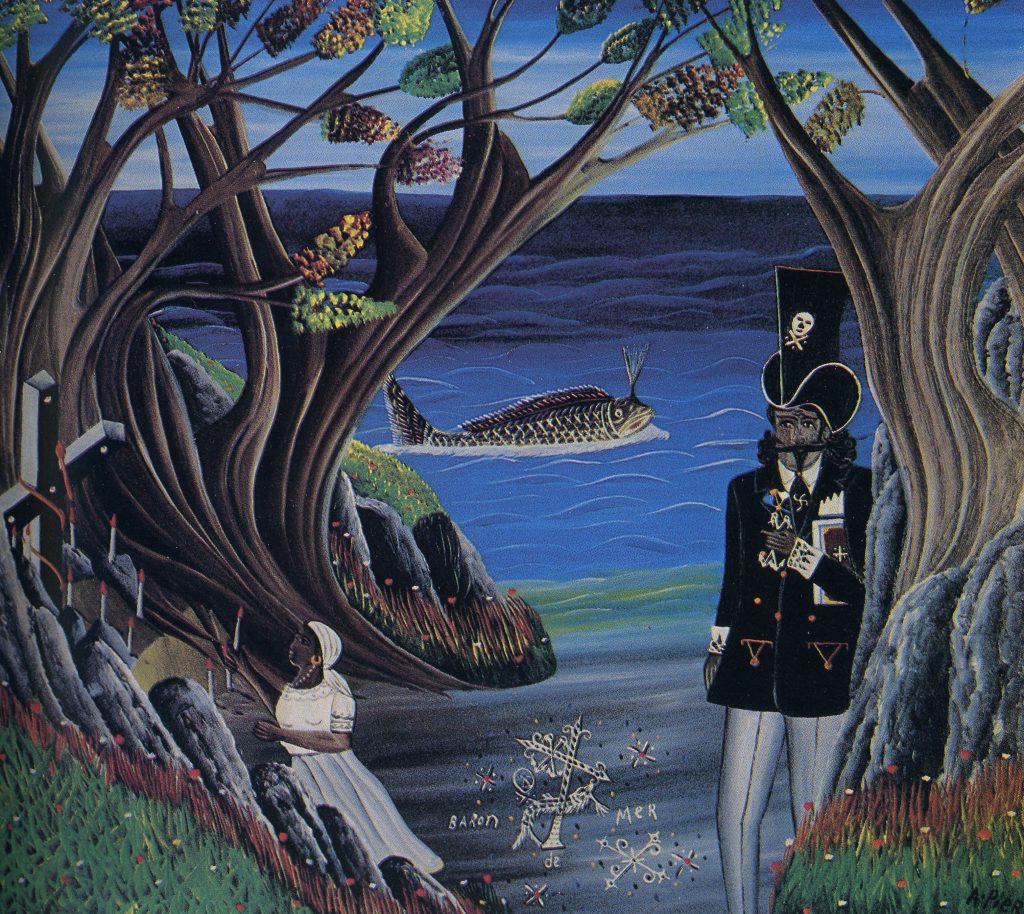
Among the best-known Gede spirits is Baron Samedi, who is closely associated with cemeteries and the dead. He is often depicted wearing a black suit, top hat, and dark glasses, sometimes with a skull-like face.
Popular culture has frequently turned Baron Samedi into a generic supernatural villain. Within Vodou, however, his significance is much more complicated. He is associated with the cemetery and the boundary between life and death, and his irreverent personality reflects the Gede’s broader relationship with mortality.
Other Gede spirits, including Baron Lacroix and Baron Kriminel, have their own identities and traditions.
A Festival for the Dead
Fet Gede is particularly associated with the beginning of November.
In Haiti, November 1 is All Saints’ Day and November 2 is All Souls’ Day, and these Catholic observances exist alongside Vodou traditions surrounding the Gede.
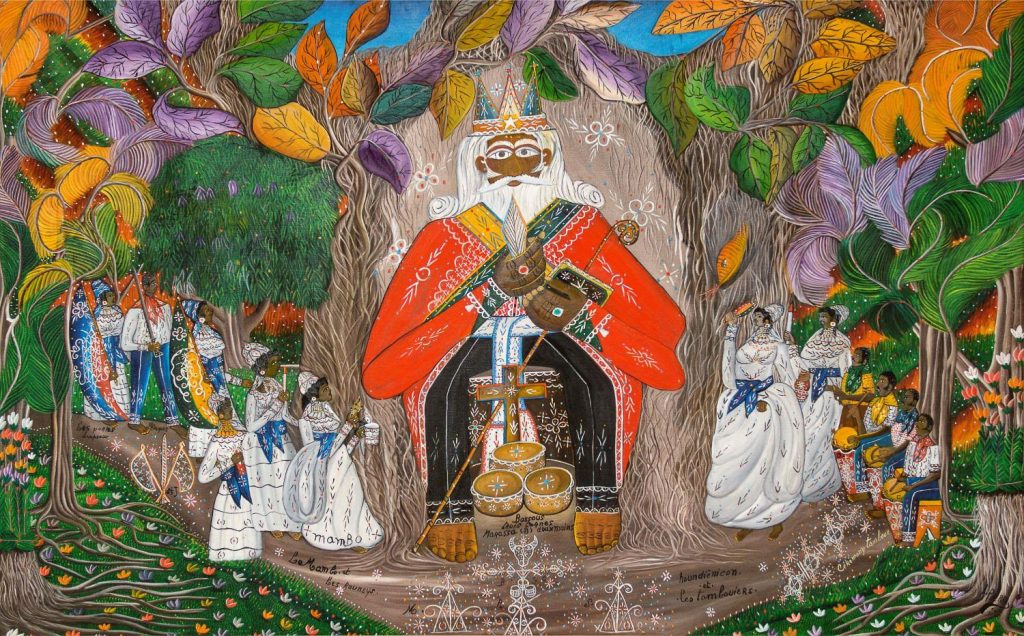
During the period, people visit cemeteries, clean and decorate graves, light candles, pray for deceased relatives, and make offerings.
Some ceremonies take place in cemeteries, where practitioners may pour libations, sing, dance, and communicate with the Gede.
Offerings vary, but may include food, coffee, alcohol, cigars, and other items associated with particular spirits.
The atmosphere can be intensely emotional, but it can also be energetic and humorous.
That combination is central to the Gede.
Death is being confronted rather than avoided.
Why Are the Gede So Playful?
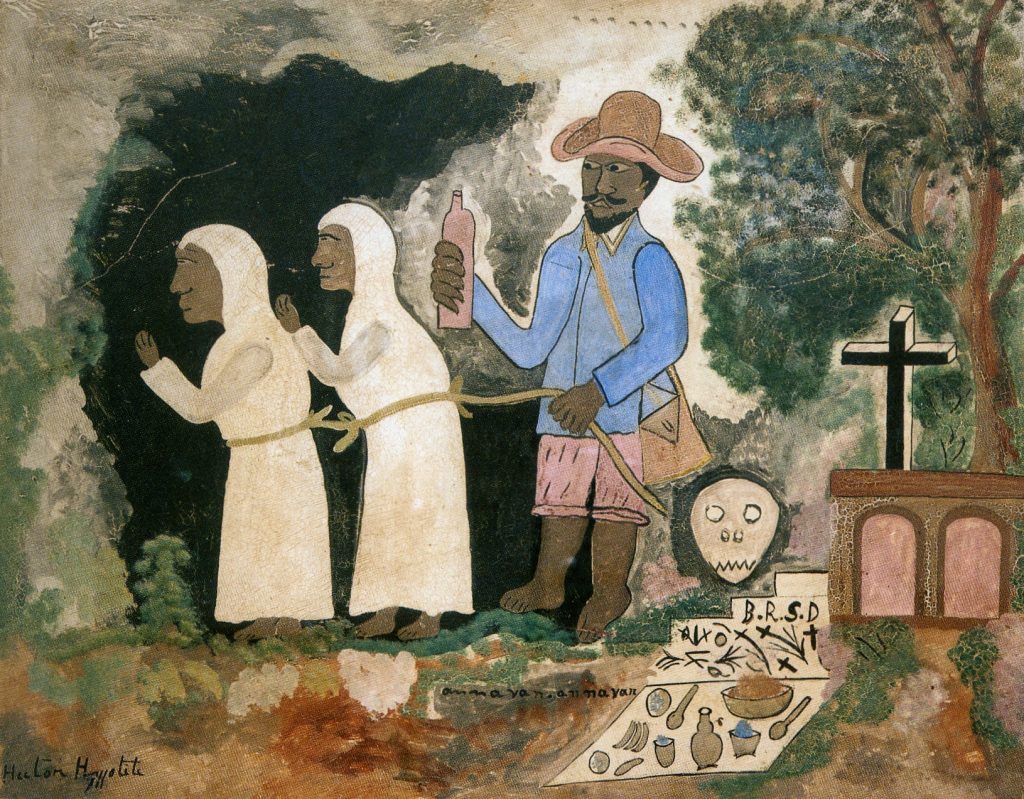
The Gede’s humor can seem strange from a modern Western perspective.
Why would spirits associated with death make obscene jokes, dance provocatively, or mock the living?
Part of the answer lies in what the Gede represent.
They occupy a boundary.
They belong to the cemetery, but they interact with the living. They represent death, but they are also associated with fertility and sexuality. They can be frightening, but they are also comic.
That contradiction allows the Gede to challenge the idea that death must always be approached with silence and fear.
Their jokes can be vulgar.
Their behavior can be deliberately outrageous.
And that is part of the point.
The Gede remind the living that everyone eventually ends up in the same place.
The Cemetery Becomes a Place of Celebration
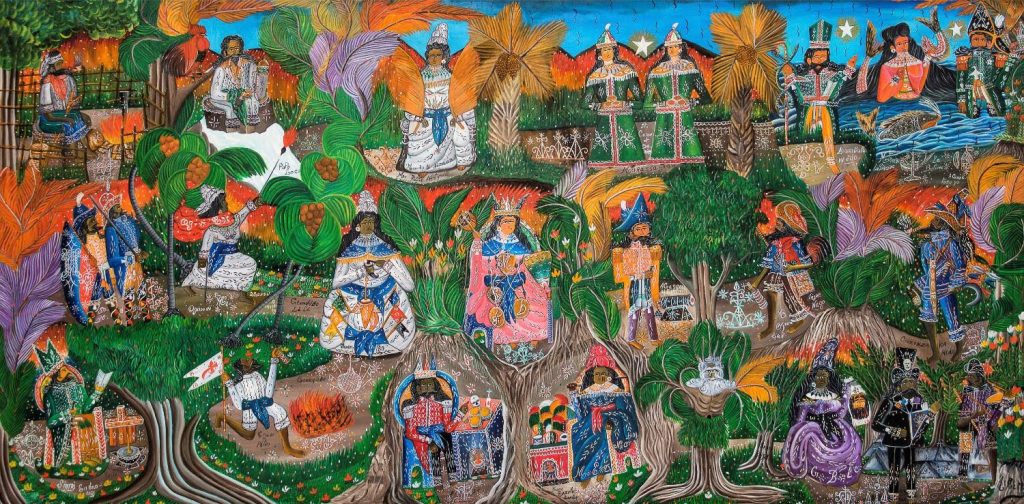
During Gede observances, cemeteries can become gathering places rather than spaces people avoid.
Families visit the graves of relatives and ancestors, clean them, bring offerings, light candles, and spend time remembering the people who have died.
In some Haitian traditions, the famous cross associated with Baron Samedi at a cemetery may be decorated or used as a focal point for offerings.
Drumming, singing, dancing, and prayer can accompany ceremonies.
For outsiders accustomed to thinking of cemeteries as quiet and solemn, the atmosphere can seem surprising.
But the celebration is not about forgetting death.
It is about acknowledging it.
The dead remain part of the community.
The Sacred Art of Gede
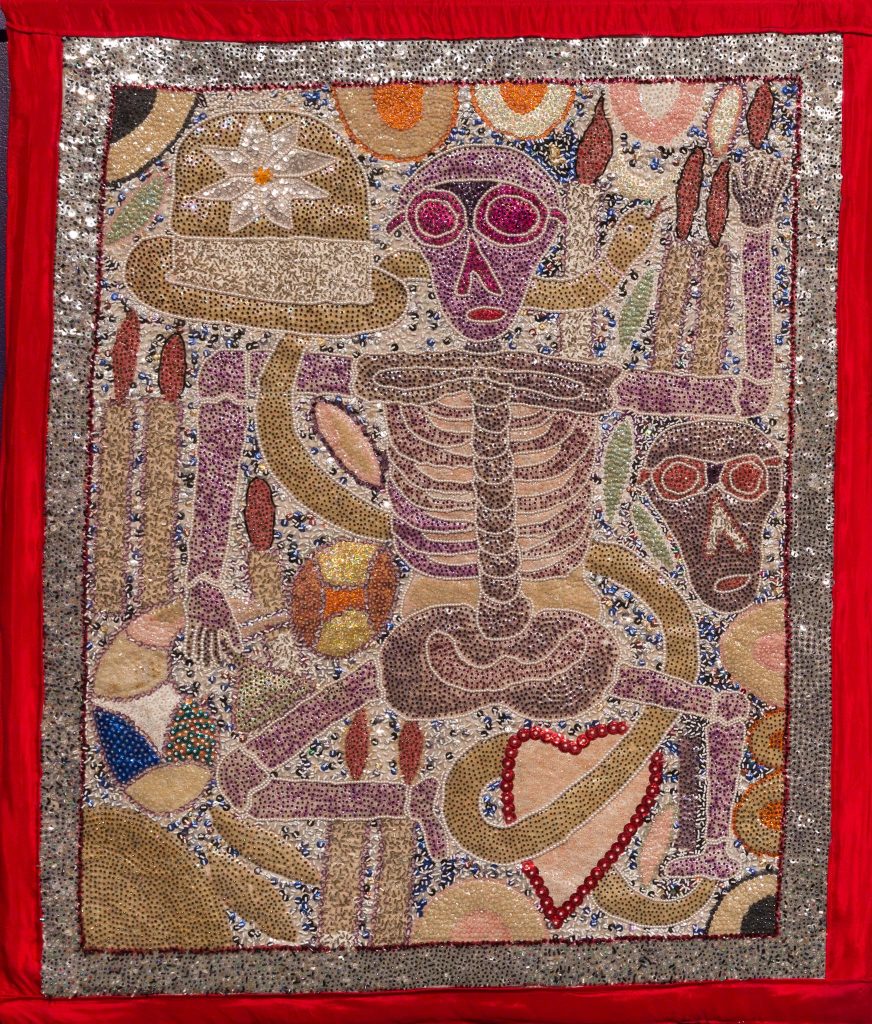
Haitian religious art also shows the relationship between the living and the dead.
Drapo Vodou, or Vodou flags, are elaborate textile works traditionally created for religious ceremonies. Artists decorate them with sequins, beads, metallic materials, and intricate images representing spirits.
Gede imagery frequently includes crosses, skulls, cemetery imagery, and other symbols associated with death and resurrection.
The result differs greatly from the dark, horror-inspired imagery associated with Halloween.
The skull does not have to represent something evil.
It can represent mortality, ancestry, and the continuing relationship between the living and the dead.
What About the “Dumb Supper”?
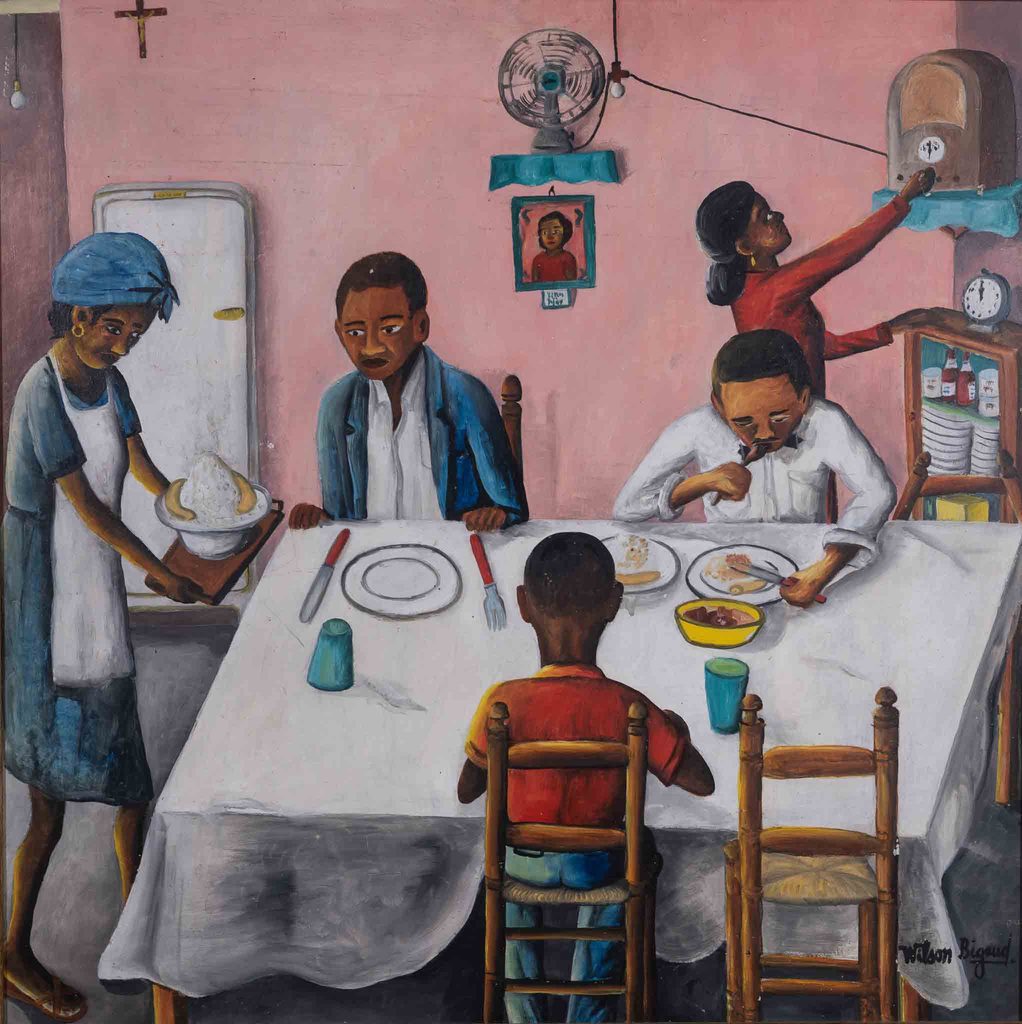
A tradition often associated with ancestor remembrance in the broader African American and Caribbean diaspora is the Dumb Supper, in which people prepare an additional place for deceased relatives.
The details vary considerably between communities.
Some traditions involve eating a meal in silence. Others involve setting aside food for ancestors or creating a special place at the table.
It belongs to a much broader collection of traditions throughout the African diaspora involving food, remembrance, and communication with the dead.
The underlying idea is familiar across many cultures:
You remember the people who came before you by making room for them.
The African Traditions Behind Gede
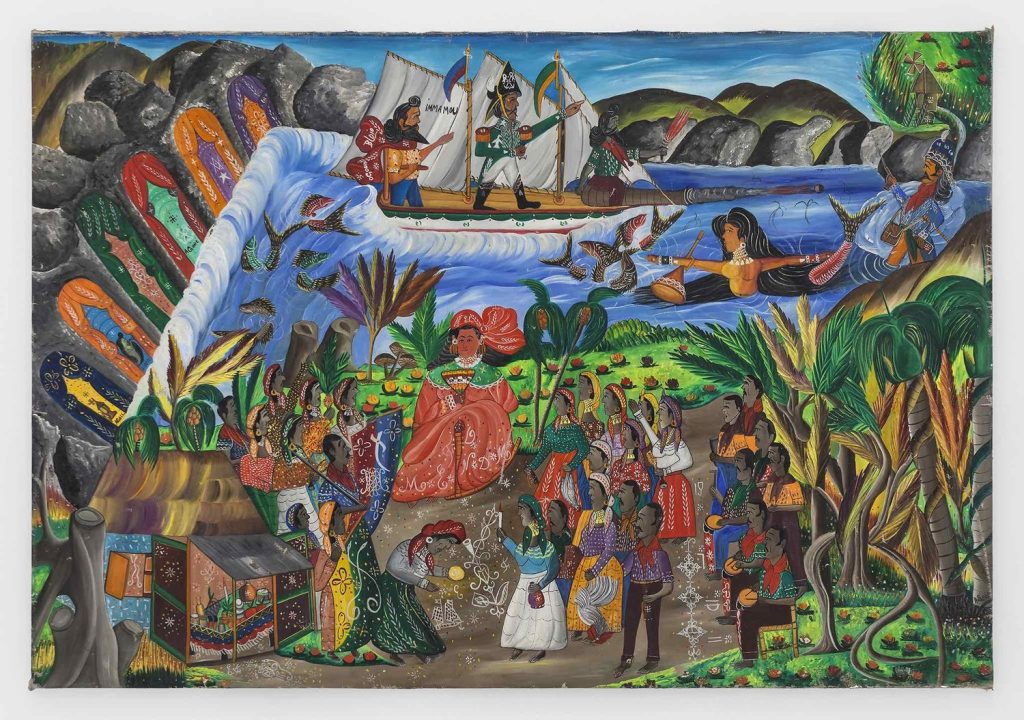
Gede developed in Haiti through the meeting of multiple African, European, and Indigenous influences.
Enslaved Africans brought with them religious traditions from different parts of West and Central Africa. These traditions did not survive unchanged. People from different societies were forced together; Catholicism became part of the religious landscape, and new Haitian traditions developed from those encounters.
Important African precedents for ancestor veneration and masquerade include traditions among the Yoruba and other West African peoples.
The Yoruba Egungun tradition is one well-known example.
During Egungun ceremonies, masked performers represent ancestral spirits and appear in elaborate layered costumes. They move through the community, dance, and interact with the living while embodying the ancestors’ presence.
The Gede and Egungun are not the same tradition, and one should not be treated as a direct equivalent of the other.
But both demonstrate a broader West African idea that the dead can remain active participants in the lives of the living.
That concept survived the Atlantic crossing and developed into new forms throughout the Caribbean and the Americas.
Death Without Disappearance
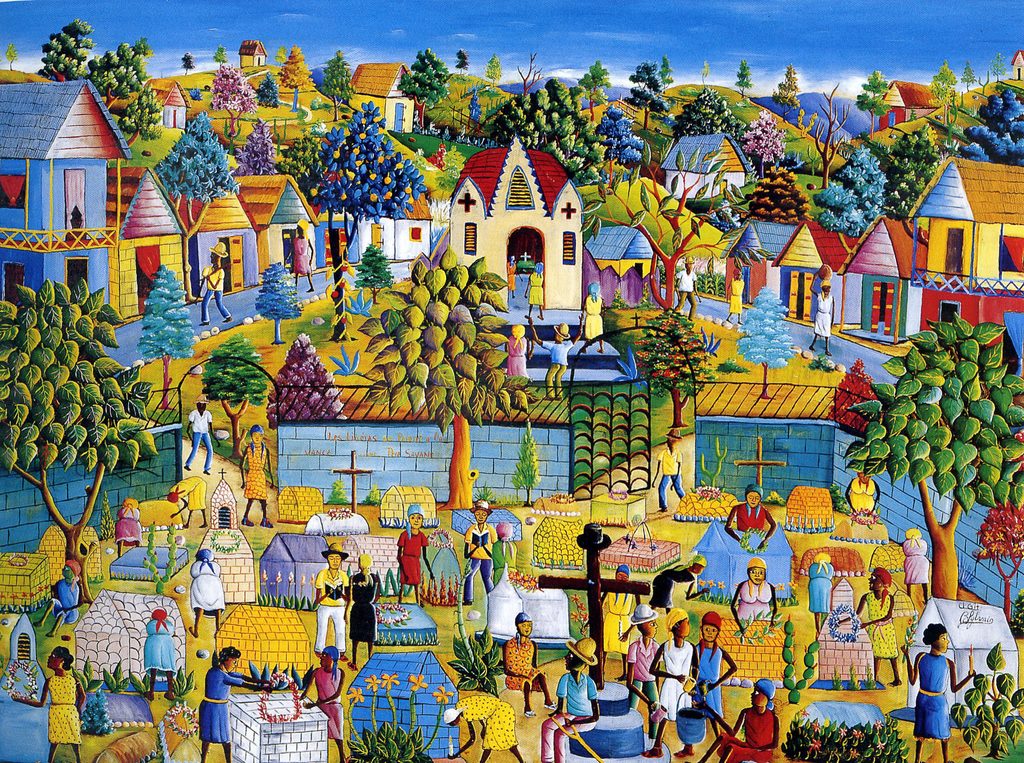
This is what makes Fet Gede so different from the way death is often portrayed during Halloween.
Halloween frequently turns death into something fictional.
Fet Gede treats it as something personal.
The people being remembered are not anonymous skeletons or ghosts. They are parents, grandparents, spouses, children, friends, and ancestors whose lives remain part of the community’s memory.
The cemetery is therefore not simply a place where the dead are left behind.
It is a place where the living can return to them.
There is grief, but there is also food.
There are prayers, but there is also laughter.
There is remembrance, but there is also celebration.
And perhaps that is the most important lesson of the Gede tradition.
Death does not have to mean that a person disappears from the lives of those they left behind.
Sometimes remembering the dead means bringing them into the conversation, making room for them, pouring a drink, lighting a candle, telling their stories, and refusing to let their names disappear.
The dead aren’t feared.
They’re remembered.
Leave a Reply