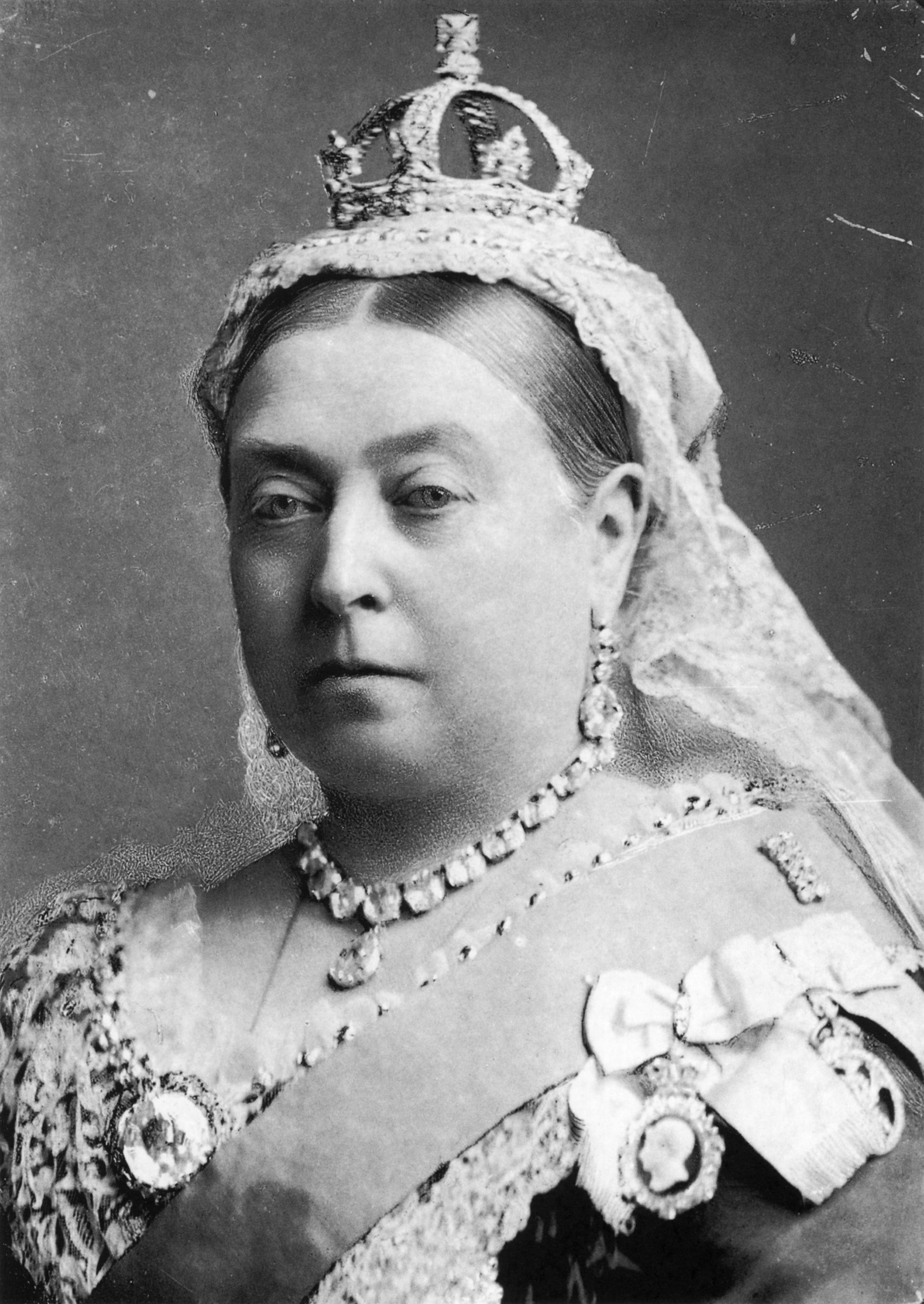
Queen Victoria is usually remembered as the stern monarch dressed in black, the woman whose name became synonymous with Victorian restraint and mourning.
But behind the palace doors, Victoria had another fascination.
Séances. Clairvoyants. Ghost stories. Messages from the dead.
Her interest in the supernatural began years before Prince Albert’s death and continued throughout her life. What started as curiosity gradually became entangled with grief, memory, and her determination to remain connected to the people she had lost.
The Mysterious Lady of Osborne House
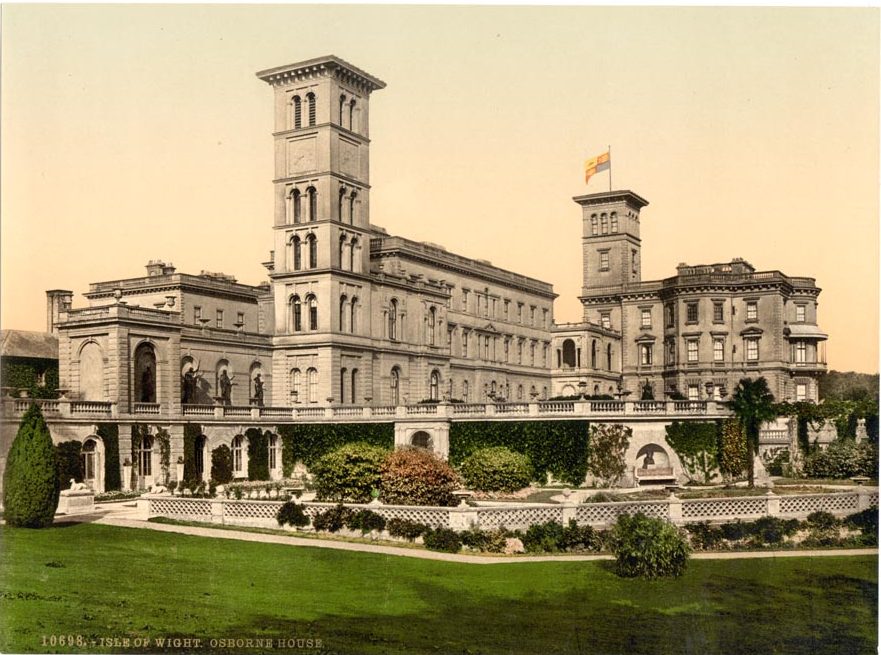
In 1845, Victoria and Prince Albert purchased Osborne House on the Isle of Wight as their private seaside retreat. It was meant to be a place where the royal family could escape the rigid expectations of court life.
The following summer, on July 15, 1846, an unusual guest appeared at Osborne.
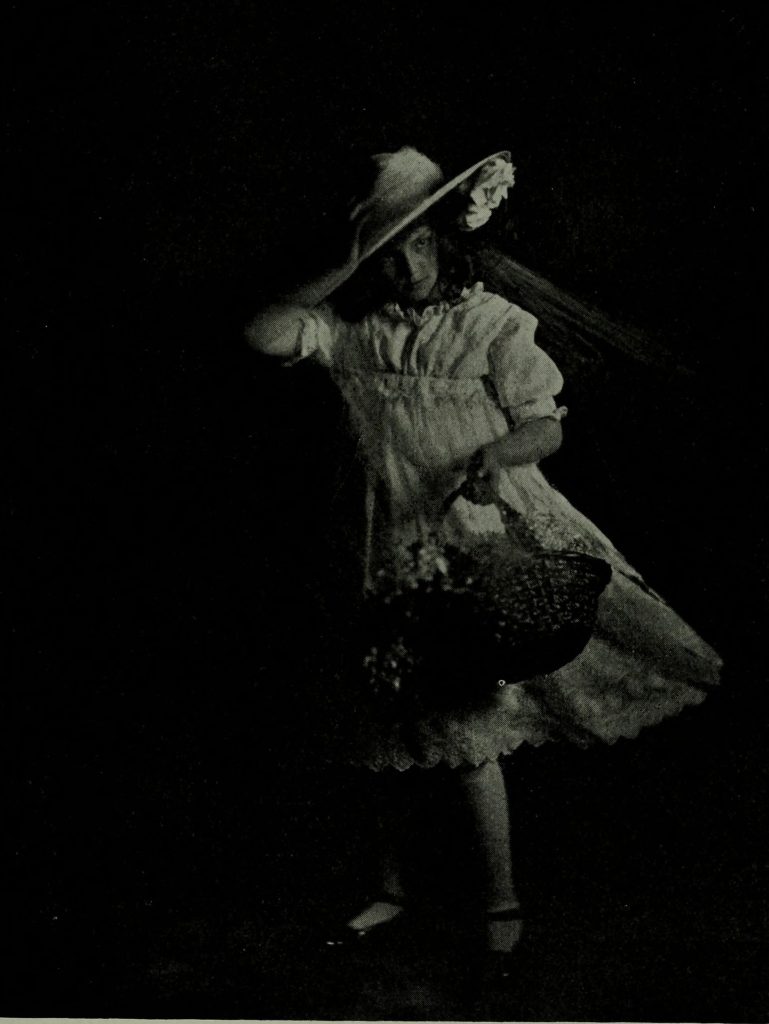
Her name was Georgiana Eagle.
She was only eleven years old.
Known as the “Mysterious Lady,” Georgiana was a young clairvoyant who performed alongside her father, a stage magician. Her demonstrations involved identifying hidden objects, answering questions, and apparently perceiving information that should have been impossible for her to know.
Victoria’s journal does not mention the performance, but Queen Victoria gave Georgiana a gold pocket watch as a gift. Its inscription praised her “meritorious and extraordinary clairvoyance” at Osborne House in July 1846.
The watch later passed through Spiritualist circles before disappearing in the 1960s.
Whatever Victoria thought of Georgiana’s abilities, the encounter reveals something important about the Queen. Her interest in the supernatural was already present more than a decade before Albert’s death.
And she was hardly alone.
A Culture Wrapped in Grief
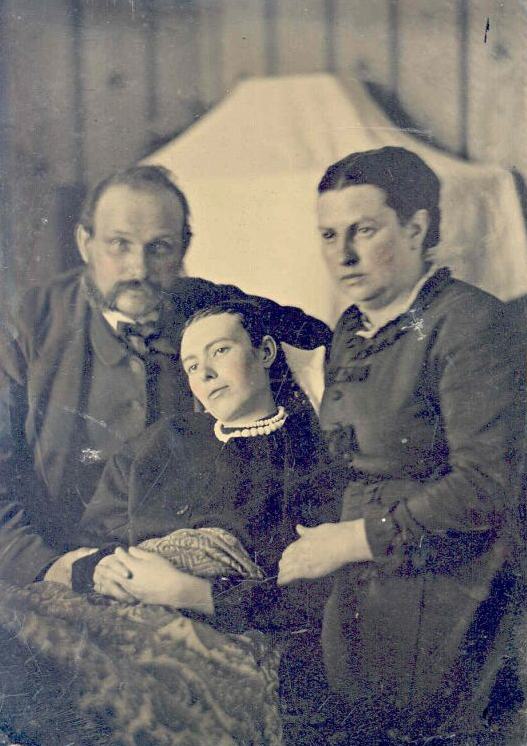
To understand Victoria’s fascination with Spiritualism, it helps to understand the world around her.
Victorian Britain was a society deeply familiar with death.
Families often cared for dying relatives at home. Postmortem photography allowed people to preserve an image of someone who had just died. People wove hair into jewelry and placed it in lockets as physical reminders of the dead.
Mourning was not simply an emotional experience. It was woven into everyday life.
Spiritualism offered something particularly appealing in that environment: the possibility that death had not completely severed the connection between the living and the dead.
Victoria and Albert encountered this world together. Séances and supernatural demonstrations were part of the broader culture they observed with curiosity.
Then, in December 1861, Albert died at forty-two.
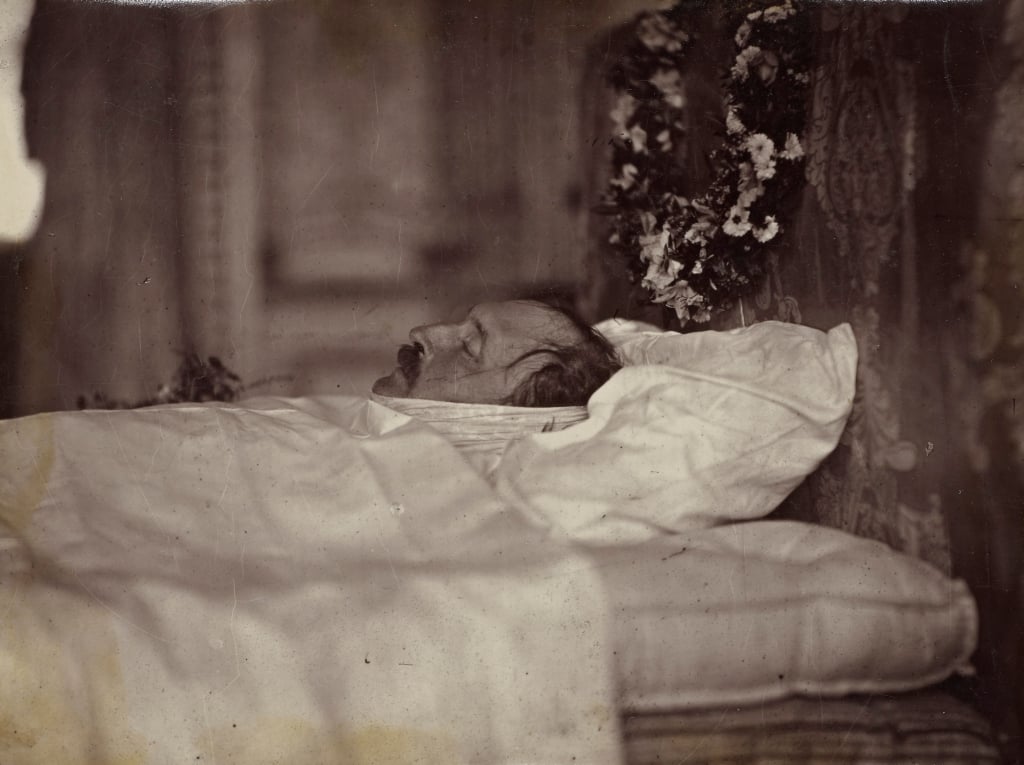
For Victoria, the supernatural suddenly carried an entirely different meaning. The Queen withdrew into prolonged mourning, but her interest in communicating with the dead took on a deeply personal dimension. Albert was no longer simply someone she remembered. He was someone she desperately wanted to reach.
The Boy Medium and the Highland Servant
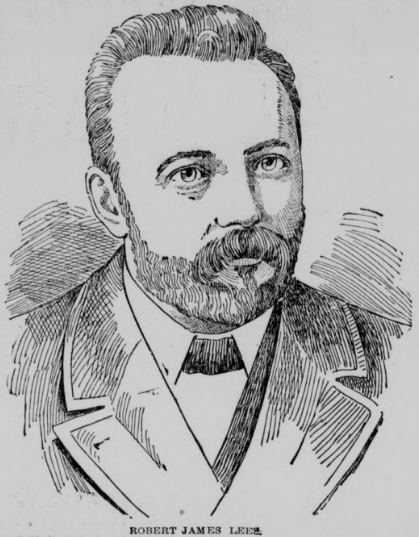
Not long after Albert’s death, stories reached Victoria about a teenage medium named Robert James Lees in Birmingham.
According to Spiritualist accounts, Lees entered a trance during a session and began speaking as though he were channeling Albert. He reportedly used private names and revealed details associated with the royal couple.
Victoria allegedly sent two trusted advisers to investigate the young medium without revealing his connection to the Queen.
They returned impressed.
Lees was eventually brought to Buckingham Palace, where he reportedly conducted nine séances for Victoria. The Queen was said to have been so convinced by his abilities that she offered him a position as her resident medium.
Lees declined.
According to the accounts, he claimed that his spirit guides had advised him against accepting the position. Instead, he told Victoria that Albert’s spirit had identified someone already within the royal household who could serve as a connection between them.
That person was John Brown.
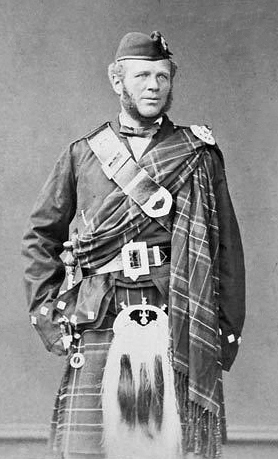
Brown was a Scottish attendant who had worked with Albert in the Highlands. After Albert’s death, he became one of the most important figures in Victoria’s private life.
He was incredibly loyal to the Queen, and Victoria trusted him deeply. Their relationship became a source of fascination and discomfort within the royal household, particularly as Brown’s influence grew.
Spiritualist accounts added another layer, claiming that Brown participated in séances and helped relay messages from Albert.
Whether acting as attendant, confidant, or supposed intermediary between worlds, Brown became inseparable from Victoria’s private life.
When he died in 1883, Victoria was devastated. She preserved his memory with the same intensity that characterized her mourning for Albert.
The Green Lady of Crathes Castle
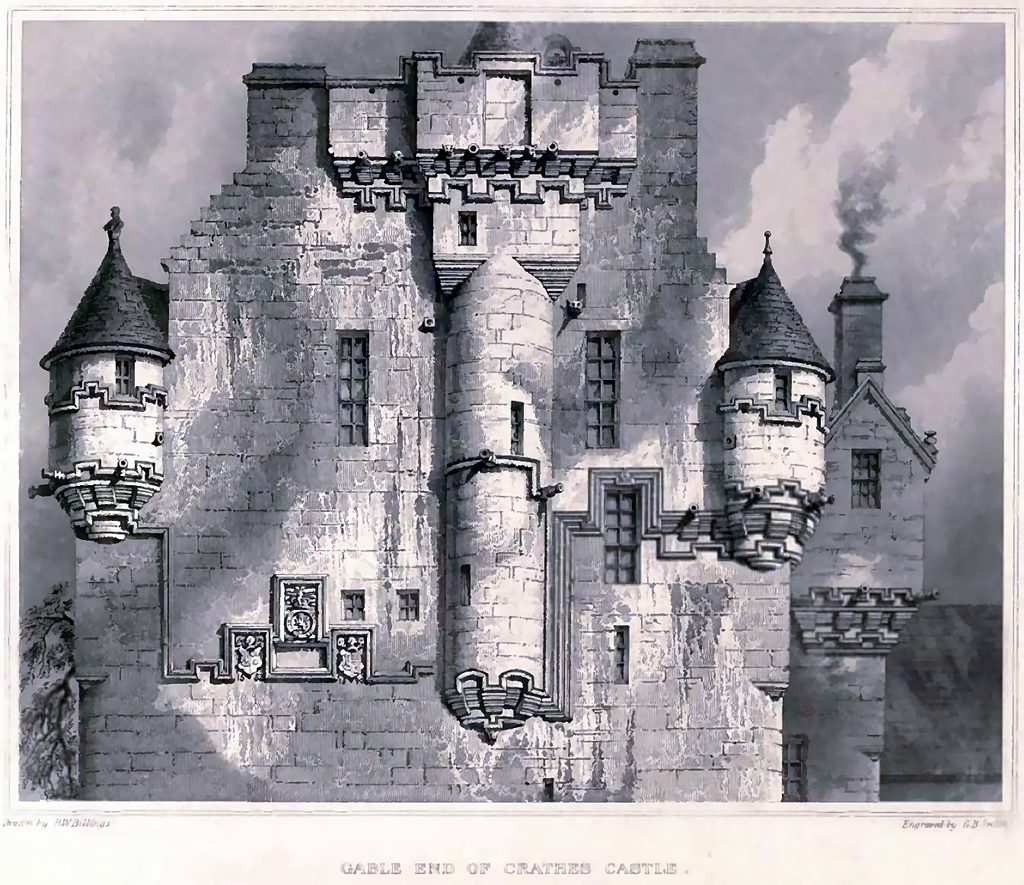
Victoria’s fascination with the supernatural was not limited to séances.
She was also captivated by Scotland’s folklore, a place she loved for its landscapes, traditions, and stories.
Among the legends associated with her Scottish travels was the Green Lady of Crathes Castle in Aberdeenshire.
According to local tradition, the apparition appeared in a green gown and moved toward the fireplace while carrying a child.
The story became even darker in the nineteenth century when workers renovating the castle reportedly discovered the remains of a woman and child buried beneath the hearth.
The discovery seemed to give the legend a physical foundation, transforming a ghost story into something far more unsettling.
Victoria herself was later said to have encountered the Green Lady during a visit, witnessing the apparition with a child before it disappeared into the castle walls.
For a Queen already fascinated by the boundary between the living and the dead, stories like this offered something more than entertainment.
They made the supernatural feel woven into the physical world around her.
What Victoria Took to the Grave
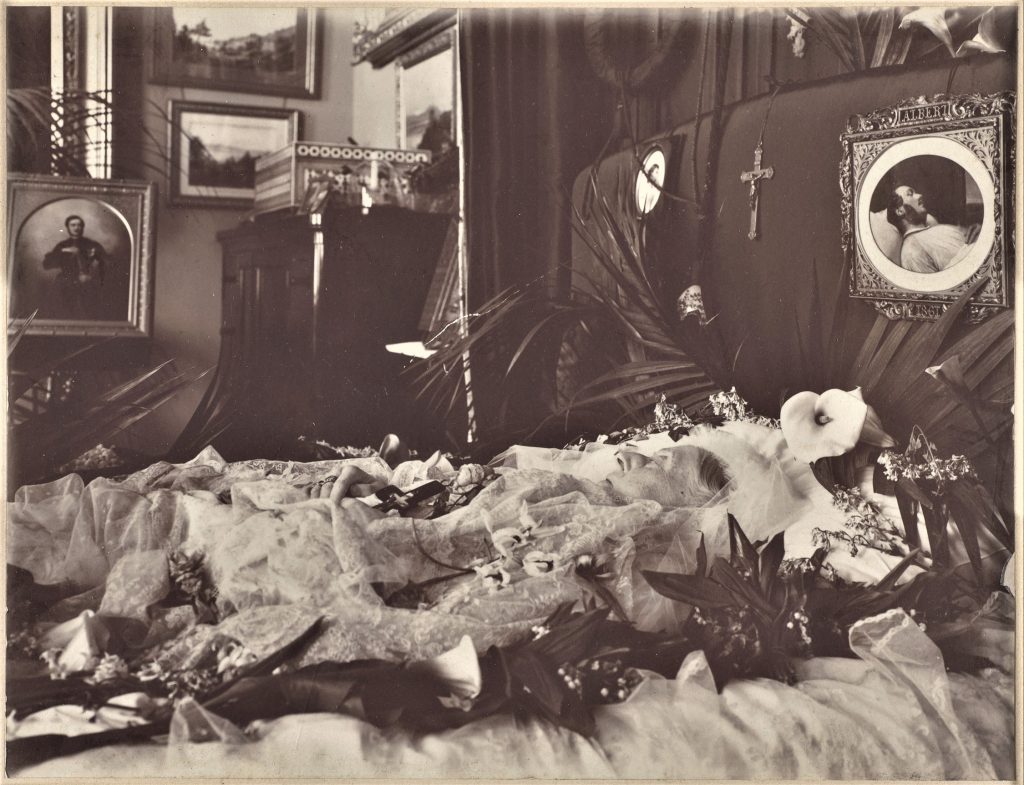
Victoria died at Osborne House on January 22, 1901.
Even in death, she maintained control over the details surrounding her final moments.
She left meticulous instructions for her burial and entrusted her physician, Sir James Reid, with carrying them out discreetly.
She wanted to be dressed in white, with her wedding veil, rather than the black mourning clothes that had defined much of her later life. She also requested a military funeral.
But beneath the ceremony was something much more personal.
Inside Victoria’s coffin was a collection of objects representing the people she had loved and lost.
A plaster cast of Albert’s hand was placed beside her.
There were lockets, photographs, hair, and other personal mementos connected to her children and close friends.
She also requested that a wedding ring belonging to John Brown’s mother be placed on her finger.
A photograph of Brown and a lock of his hair were tucked into her left hand beneath a bouquet, hidden from view.
It is an extraordinary collection of memories for a woman who had spent decades surrounded by the machinery of monarchy.
She had been an empress and one of the world’s most powerful women.
Yet when she was finally laid to rest, she carried with her tiny physical reminders of the people she could no longer hold onto.
The Record That Disappeared
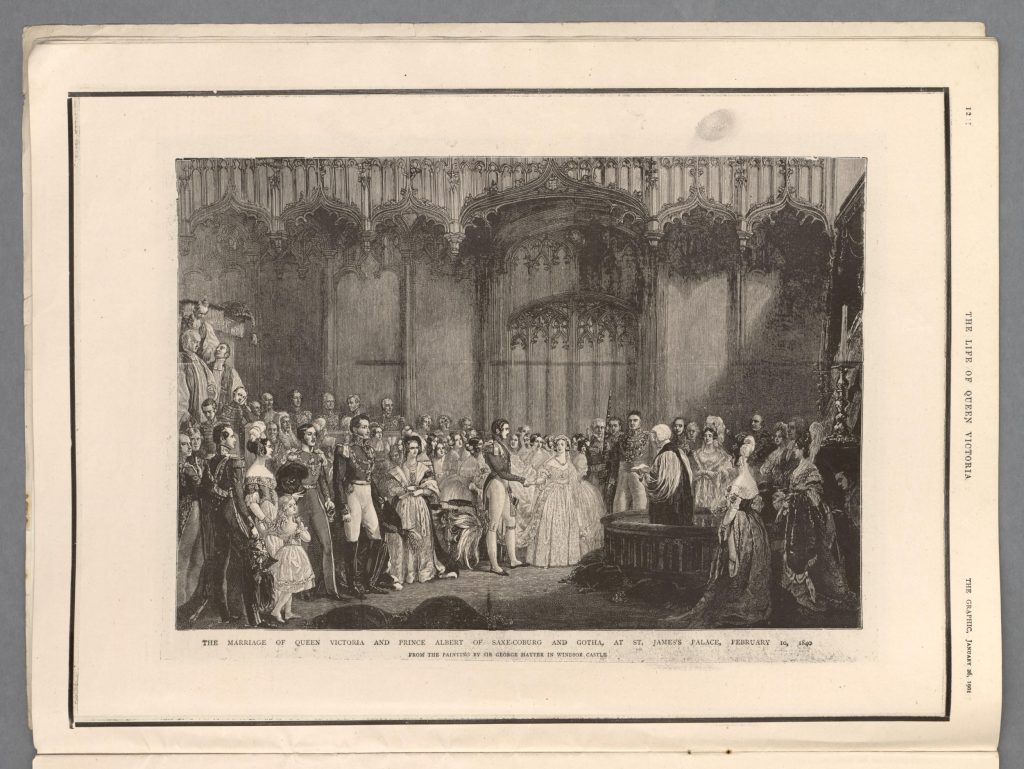
Victoria’s relationship with the supernatural became even more difficult to reconstruct after her death.
Her daughter, Princess Beatrice, spent roughly thirty years editing Victoria’s journals. She transcribed and rewrote portions of the original material, while many of the original manuscript volumes were eventually destroyed.
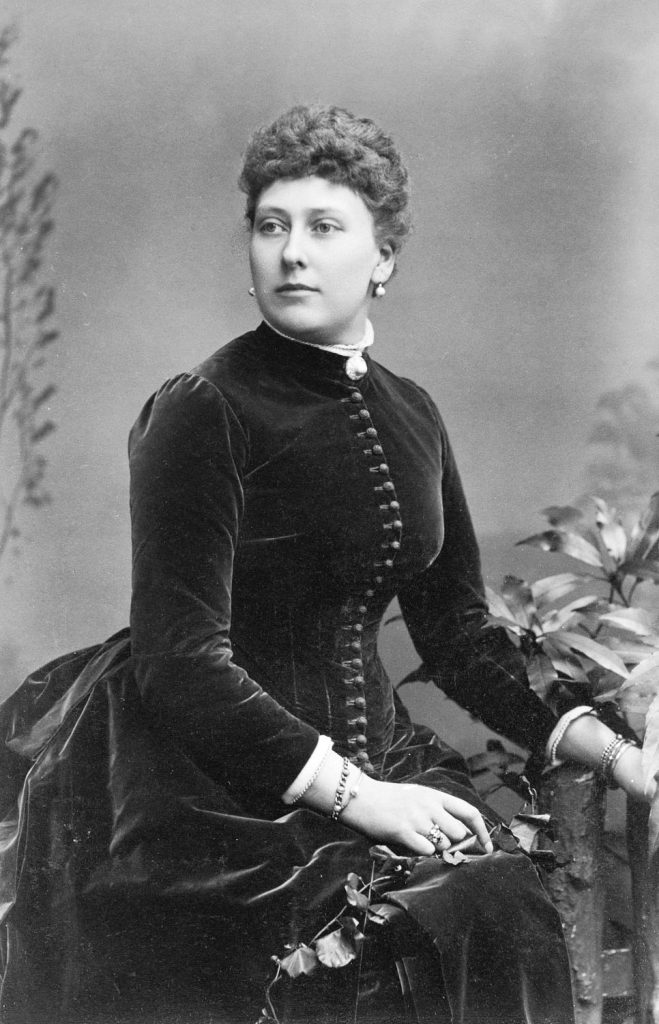
Papers and personal materials associated with John Brown also disappeared. King Edward VII ordered the destruction of documents and mementos connected to Brown, further reducing the surviving record of one of the most controversial relationships of Victoria’s later life.
The result is a strange contradiction.
Victoria left behind an enormous documentary record, yet some of the most revealing pieces of her private life were deliberately altered or removed.
What remains are fragments.
An engraved gold watch connected to an eleven-year-old clairvoyant at Osborne House.
Stories of séances and mediums.
A lifelong attachment to ghost stories and supernatural traditions.
Personal objects hidden inside a royal coffin.
And the deliberate destruction of records surrounding the people and experiences that mattered most to her.
Queen Victoria spent much of her life surrounded by death.
She mourned her husband for decades. She preserved the belongings of the people she loved. She collected physical reminders of those who had disappeared from her world.
And somewhere between grief, curiosity, Spiritualism, and memory, the boundary between mourning the dead and trying to reach them became remarkably thin.
For a Queen whose public image was built around duty and restraint, her private fascination with the supernatural reveals a very different side of Victoria.
She did not wish to simply live among the dead.
She spent much of her life trying to find a way to hear them.
Leave a Reply