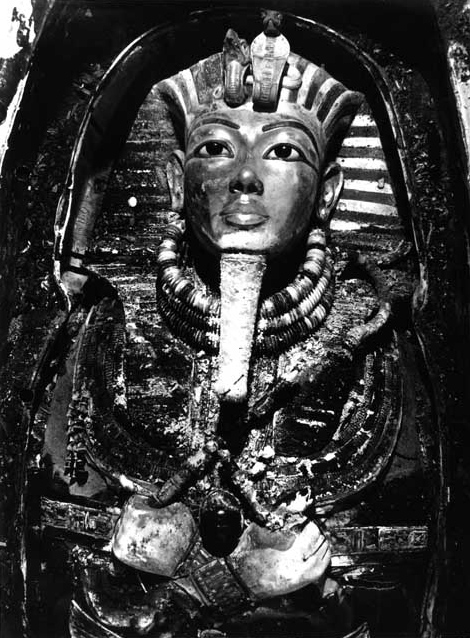
King Tutankhamun’s funerary mask is one of ancient Egypt’s most recognizable objects.
The gold face, striped nemes headdress, and inlaid eyes have become almost synonymous with the young pharaoh himself. But the mask may not have been made specifically for Tutankhamun.
When researchers look closely at its construction, they find differences in the gold, altered inscriptions, and details that have led some Egyptologists to believe the mask was originally intended for someone else.
None of these clues gives us a complete answer on its own. But together, they raise an interesting possibility: the mask may have been adapted for Tutankhamun after his unexpected death rather than commissioned for him from the beginning.
1. The Mask May Not Have Been Made for Tutankhamun
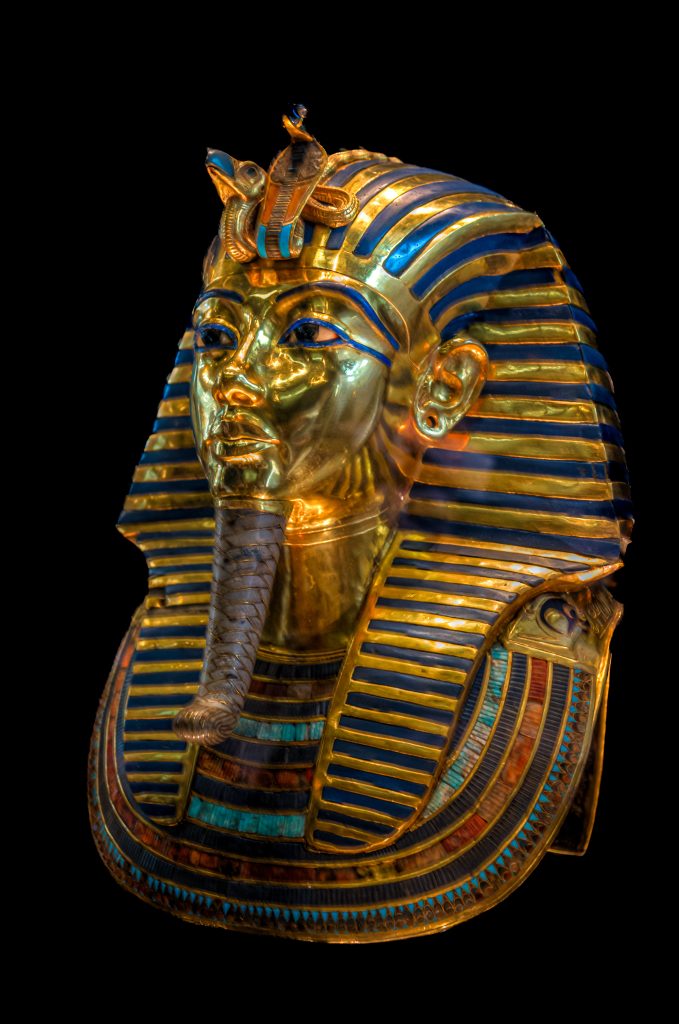
The first clue is in the gold itself.
The mask was constructed from multiple pieces of gold rather than a single sheet. Chemical analysis has also found differences in the gold composition used in different parts of the mask. The face, for example, has a higher silver content than some of the gold used elsewhere.
That alone does not prove the mask belonged to another pharaoh. Ancient Egyptian workshops used different sources of gold, and compositional variations are not necessarily evidence of reuse.
But the mask’s construction has attracted considerable attention from Egyptologists, particularly Nicholas Reeves.
Reeves has argued that the mask was originally made for Neferneferuaten, a female ruler who briefly occupied the throne during the complicated succession that followed Akhenaten’s reign. He has also suggested that some of the mask’s features were altered when it was reassigned to Tutankhamun.
The theory fits a larger problem surrounding Tutankhamun’s burial.
The young king died unexpectedly at around 18 or 19, after a relatively short reign. His tomb appears to have been prepared under considerable time pressure, and several objects found inside it may have originally been intended for other people.
If the mask were also repurposed, it would not have been an isolated example.
But there is an important caveat: the mask’s original owner has not been conclusively established.
Neferneferuaten is a compelling possibility, not a settled fact.
2. The Pierced Ears Raise Another Question
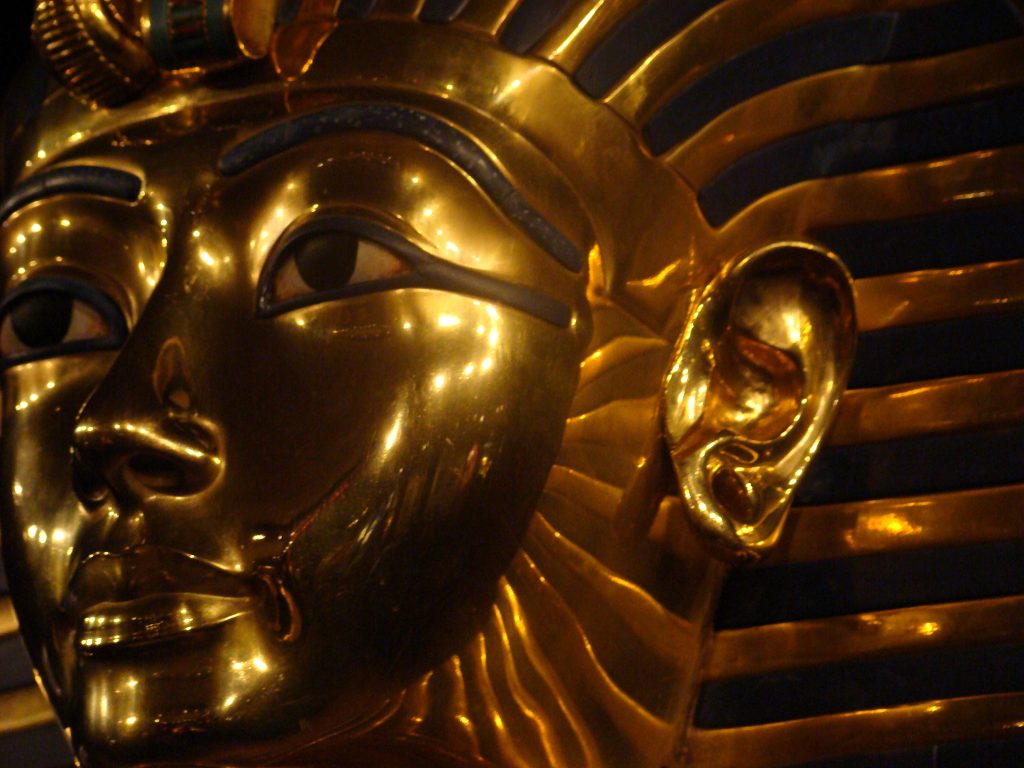
The mask also has pierced earlobes.
That detail has attracted attention because earrings and pierced ears were strongly associated with women and children in Egyptian art, although the idea that adult male pharaohs never had pierced ears is too absolute.
Tutankhamun himself is depicted wearing earrings, and pierced ears were not limited to women.
So the ears alone cannot prove that the mask was originally made for a female ruler.
What makes them interesting is that they fit into the larger argument about the mask’s construction.
If the mask was originally designed for a woman or young royal and later adapted for Tutankhamun, the pierced ears would make sense as another feature inherited from its earlier design.
The small gold coverings over the ears have also been interpreted as evidence that the openings were altered when the mask was reassigned.
Again, though, this is supporting evidence rather than a smoking gun.
The mask’s ears suggest that something about its original design may have differed from what we see today.
Exactly what that was remains debated.
3. There May Be Another Name Beneath Tutankhamun’s
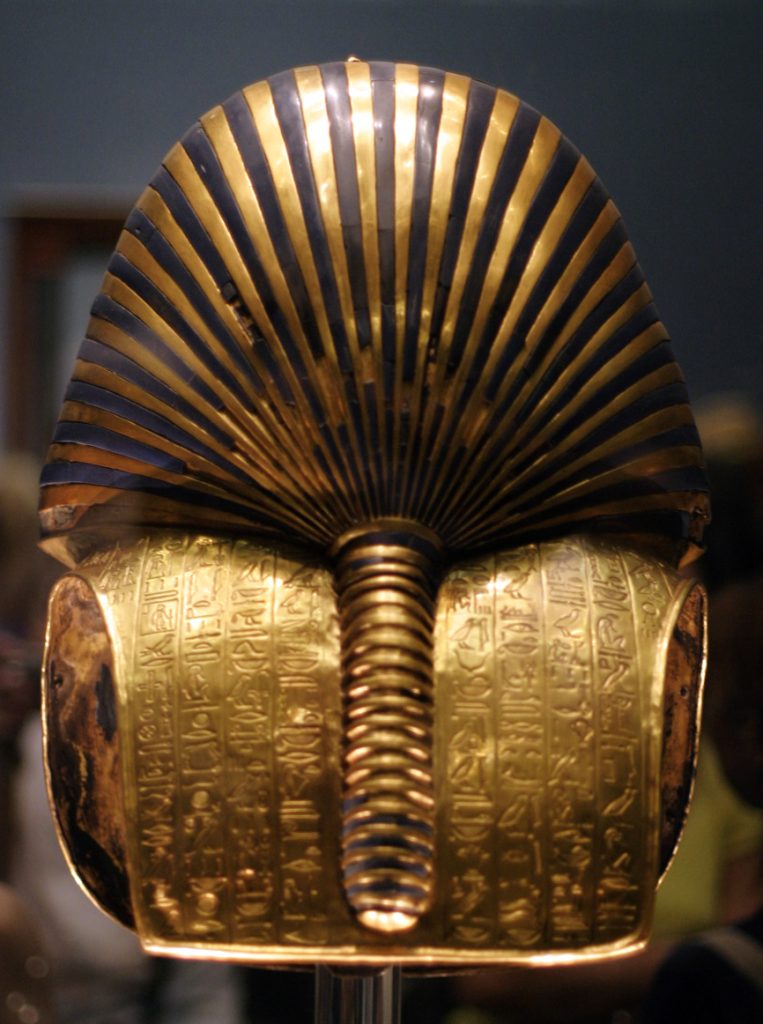
One of the most interesting parts of the mask is the writing on its back.
A funerary spell from the Book of the Dead is engraved across the surface, protecting the king as he enters the afterlife. Tutankhamun’s royal names appear elsewhere on the mask.
But some researchers have argued that the inscriptions themselves show signs of alteration.
Nicholas Reeves has proposed that Tutankhamun’s cartouches were added over earlier inscriptions belonging to another ruler. In particular, he has suggested that the name Ankhkheperure Neferneferuaten may lie beneath the later alterations.
If correct, this would provide an important clue about the mask’s history.
Instead of being made from scratch for Tutankhamun, the object would have begun as royal funerary equipment belonging to an earlier ruler and later been modified for the young king.
The interpretation remains controversial, however.
Identifying faint marks beneath an altered inscription is difficult, and not every Egyptologist agrees that the underlying signs belong to Neferneferuaten.
What is clear is that the inscriptions have undergone some form of alteration.
The question is whose name was there first.
4. The Cobra and Vulture Were Not Simply Decorative
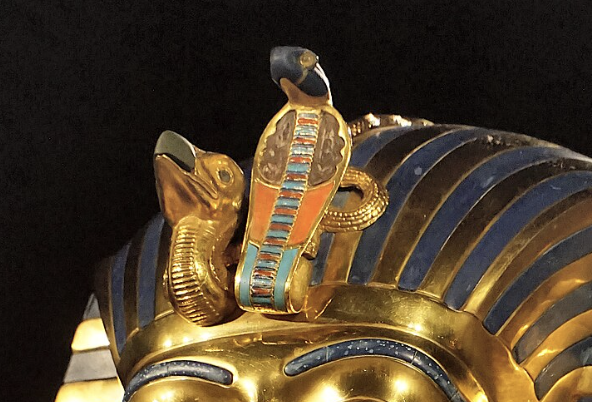
Look closely at Tutankhamun’s forehead, and two familiar Egyptian symbols appear above his brow.
A cobra represents Wadjet, associated with Lower Egypt, while a vulture represents Nekhbet, associated with Upper Egypt. Together, they symbolize the king’s rule over the united Egyptian kingdom.
Their presence is completely appropriate for a pharaoh.
Their construction, however, is more interesting.
The two figures are separate pieces attached to the headdress, and differences in how they were mounted have been used as evidence that parts of the mask were modified.
This has been incorporated into the larger Neferneferuaten theory.
Some researchers have suggested that the original royal headdress may have been designed differently and that one of its protective figures was replaced when the mask was adapted for Tutankhamun.
The idea is plausible within the broader pattern of reused royal objects from this period, but we cannot state it as fact.
What the mask does show is that its decorative elements were assembled separately and that at least some of its construction was more complicated than the finished object makes apparent.
The perfect symmetry of the final piece hides the work that went into assembling it.
5. Not All of the Blue Is Lapis Lazuli
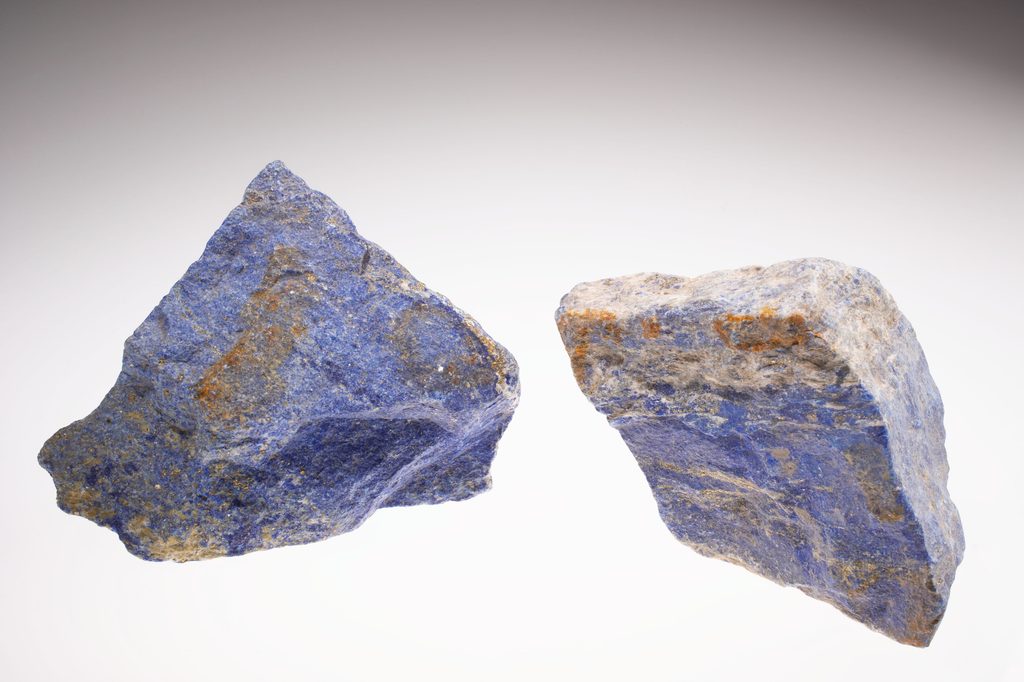
The mask is famous for its deep blue and gold color scheme.
Some of that blue really is lapis lazuli, a valuable stone imported into Egypt from regions far to the east. But not every blue section is made from natural lapis.
Egyptian artisans were highly skilled at producing colored glass and faience, and the mask also contains manufactured blue materials.
This is not evidence that the artisans were trying to create a cheap imitation of a more expensive stone.
Ancient Egyptian artisans regularly combined natural stones, glass, faience, and other materials in elite objects. The choice depended on the desired color, appearance, availability, and technical requirements of the piece.
This distinction matters because it tells us something about Egyptian craftsmanship.
The mask was not simply a collection of the most expensive materials available. Its makers were selecting different substances for different parts of the design.
And the result was convincing enough that, thousands of years later, it can still be difficult to tell where natural stone ends and manufactured material begins.
A Mask With a Complicated History
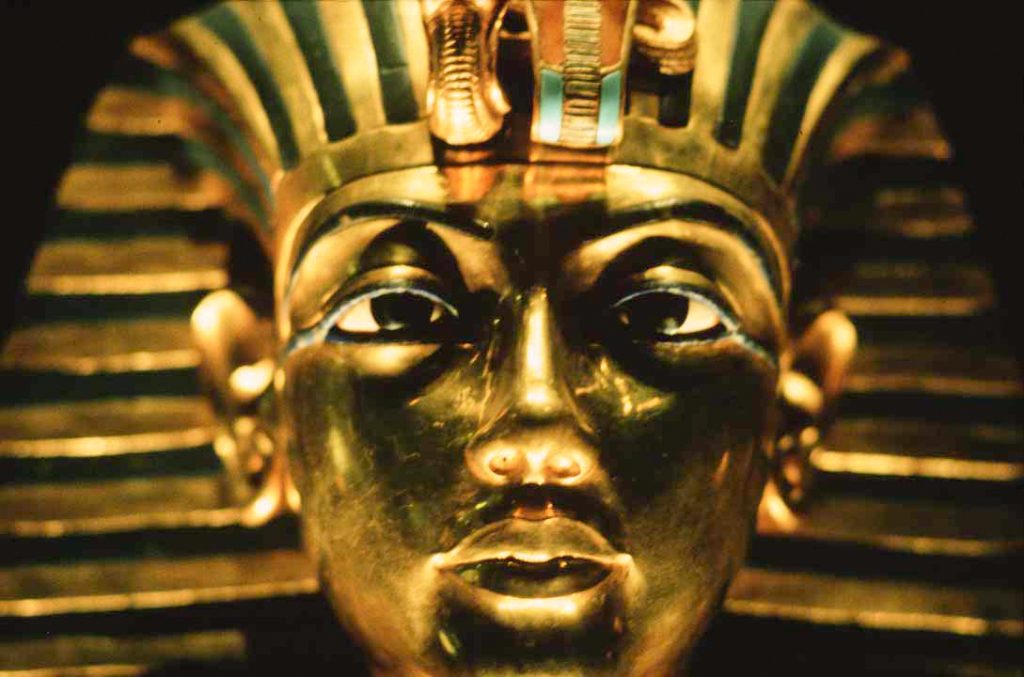
The most interesting thing about Tutankhamun’s mask may be that we cannot completely agree on its history.
The gold used throughout the mask differs in clear ways. Its construction involved multiple pieces. Some of its features have been altered or have raised questions about its original design. Researchers have also proposed that at least some of the inscriptions may have belonged to an earlier ruler.
But that does not automatically mean we are looking at a mask stolen from Nefertiti or another forgotten pharaoh and hastily altered for Tutankhamun.
The evidence is more complicated.
What we can say is that Tutankhamun’s burial was assembled during a period of political change, and the young king’s unexpected death may have left his burial team with limited time to complete everything required for a royal funeral.
The possibility that they adapted existing royal objects for him is therefore not surprising.
Whether the famous mask was one of those objects is a question researchers are still trying to answer.
And that makes the mask more interesting, not less.
The face we see today may belong to Tutankhamun.
But some of the history hidden beneath that face may belong to someone else.
Leave a Reply